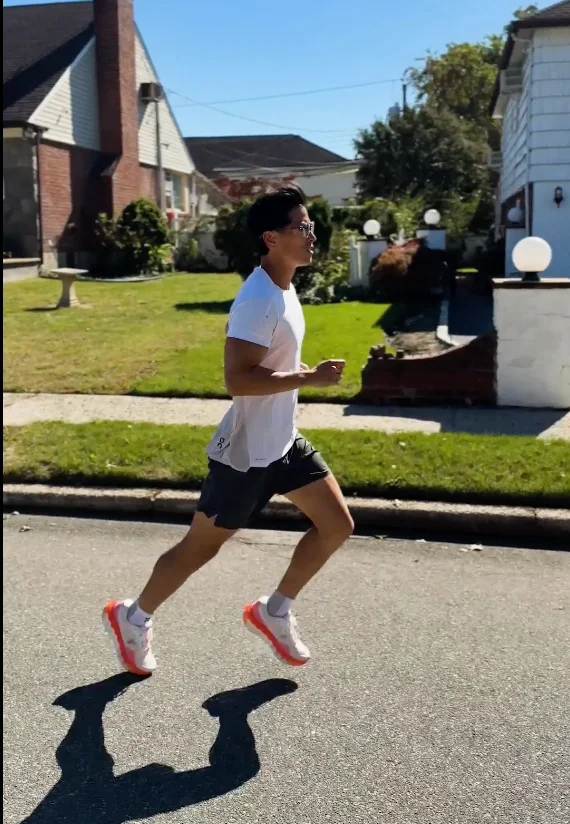
Understanding Hip Flexors: The Key to Enhanced Running
Feeling discomfort in your hips can be a common experience for many runners, whether you’re easing back into a routine after a hiatus, pushing your limits with increased mileage, or ramping up workout intensity. As with any physical activity, your body speaks to you through these sensations, and if you're finding your hips feel tight or achy, you're certainly not alone.
Turning to stretching those muscles might seem like the logical go-to, but here's the catch: often it's strengthening your hip flexors that you really need. Just like essential muscle groups such as your glutes, quadriceps, and hamstrings, your hip flexors play a critical role in your running efficiency. They help lift your legs and propel you forward, making their strength a non-negotiable for any serious runner.
Who Are Your Hip Flexors?
The hip flexors refer primarily to the iliacus and psoas major muscles located at the front of your hips. According to Erica Coviello, a certified personal trainer and running coach, these muscles are integral to your movement. “They lift your knee and facilitate leg movement while ensuring the hip joint remains stable,” she explains.
Now, if you think about it, that means these muscles are vital not just for sprinting but for maintaining good form and preventing potential injury during your runs. This might seem like a minor detail, but overlooking hip flexor strength can lead to a cascade of issues in your performance and overall comfort.
Why Strength Matters
The benefits of fortifying these muscles can’t be understated. A well-rounded approach that includes targeted hip flexor exercises can lead to significant improvements in strength and endurance. Additionally, achieving stronger hip flexors helps protect your back and hamstrings from undue strain. Overcompensation from weak hip flexors often results in pain and discomfort, forcing you to reconsider your running regimen.
Many athletes might shrug off the importance of these muscles, mistaking weakness or pain for simple tightness. They’ll often try to stretch it out rather than address the underlying strength issues. However, that’s a potentially harmful misstep.
To gain a better grasp on the importance of strengthening hip flexors, we consulted two expert trainers who highlighted practical strategies that could help runners not only improve their performance but also enjoy their training more. With the right insights, you’ll soon discover how building hip flexor strength can translate into longer, more enjoyable runs and sharper overall performance.
If you’re serious about improving your running, understanding and addressing hip flexor strength might just be your secret weapon.
How to Incorporate These Exercises
If you’re looking to enhance your strength-training routine, incorporating hip flexor exercises can be a smart move. Experts recommend integrating these routines at least twice a week, aiming for 2-3 sets of 10-12 repetitions for each exercise.
1. Banded Knee Drive
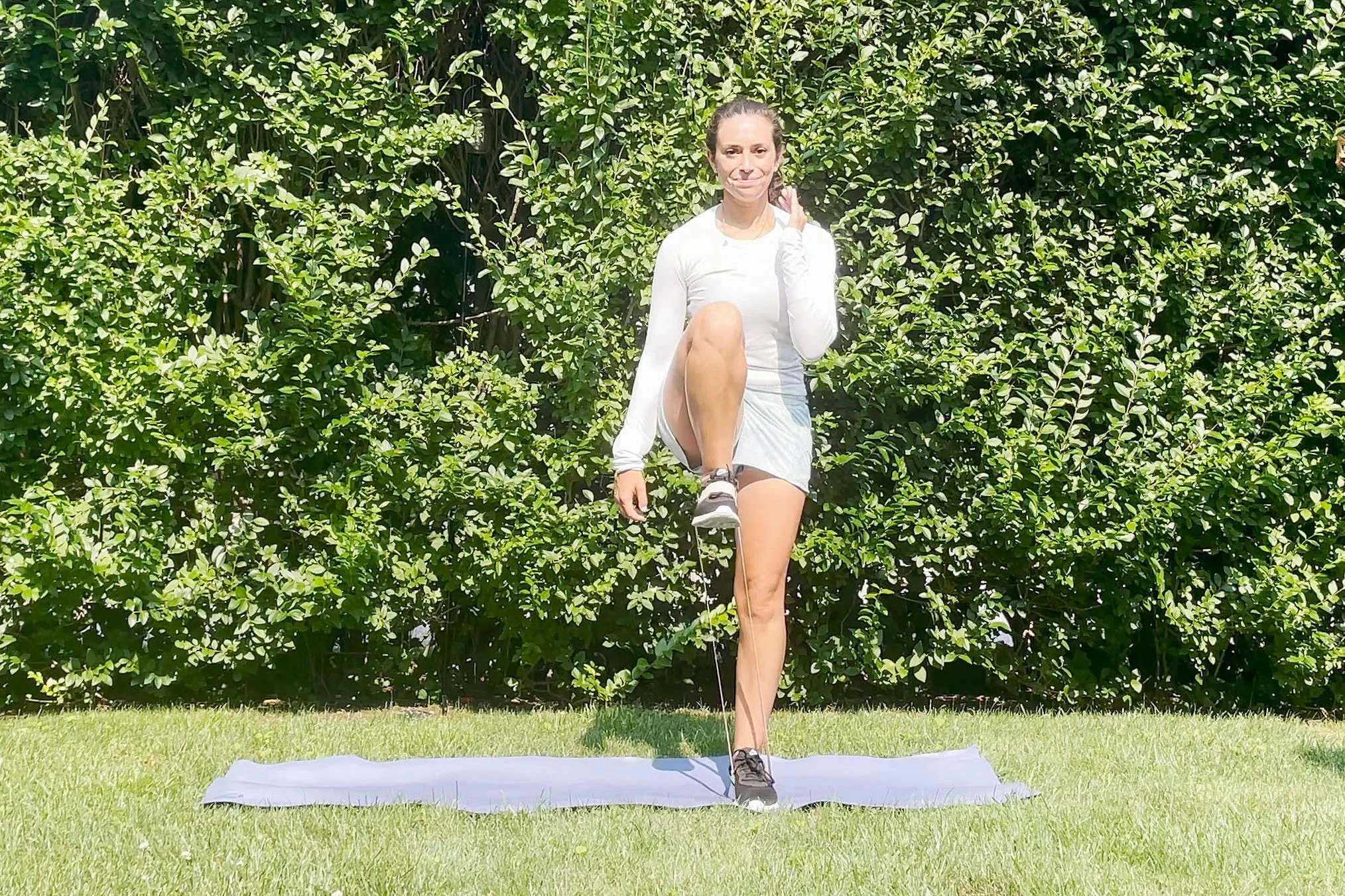 Photo by Samantha Rothberg
Why This Exercise Works:
The banded knee drive closely resembles the natural motion of running. This makes it exceptionally effective at boosting both power and
balance, which is critical for an efficient running stride, according to fitness expert Ripps.
Steps:
- Stand tall with your feet hip-width apart and place your hands on your hips.
- Wrap a mini band around both feet.
- Lift your right knee towards your chest and then lower it back to the ground.
- Repeat the motion with your left knee.
- Continue alternating legs for all repetitions.
2. Lying Leg Lift
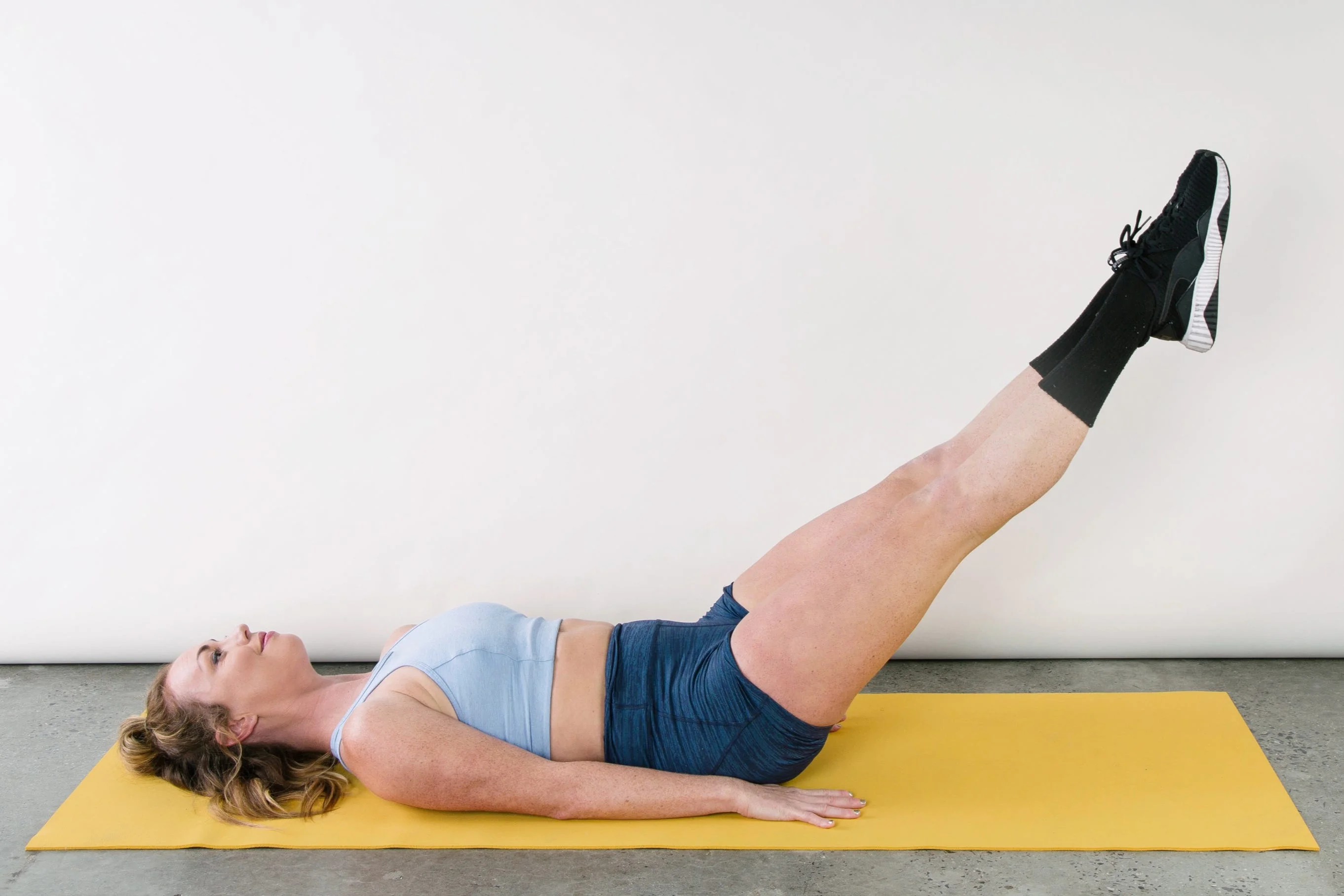 Photo by Julia Hembree Smith
Why This Exercise Works:
Lying flat on your back and raising your legs isolates the hip flexors effectively. Ripps highlights that this exercise is fundamental and emphasizes the importance of controlled movements throughout the lift.
Steps:
- Begin by lying on your back, legs stretched out straight, and arms resting by your sides. For extra support, place your hands under your lower back.
- Keep your legs together and lift them straight up until they’re perpendicular to the ground.
- Slowly lower your legs just above the floor, maintaining contact with your back.
- Repeat.
3. Dead Bug
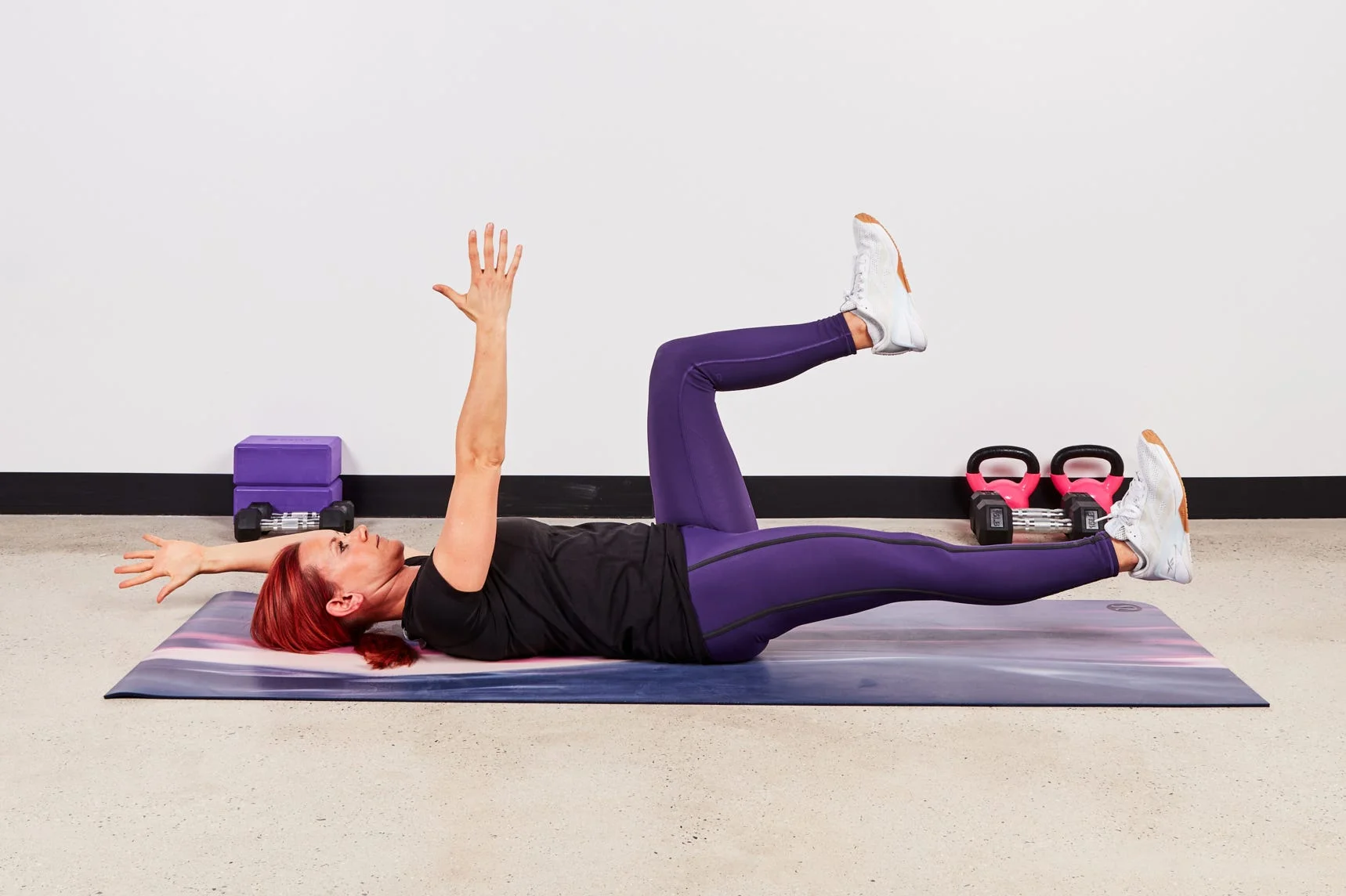 Photo by Trevor Raab
Why This Exercise Works:
Dead bugs are an effective floor exercise targeting the hip flexors and
core muscles, says Coviello. If you’re short on equipment, this is also an exercise you can do virtually anywhere.
Steps:
- Lie on your back with both legs lifted, knees bent at a 90-degree angle above your hips.
- Extend your arms straight up, parallel to your shoulders—this is your starting position.
- Simultaneously extend your left leg towards the floor and lower your right arm backward.
- Pause briefly, then return to the starting position.
- Switch sides and repeat.
4. Hanging Leg Raise
 Photo by freemixer // Getty Images
Why This Exercise Works:
Whether performed on a pull-up bar or with a captain’s chair, hanging leg raises are fantastic for focusing on your hip flexors. According to Ripps, this exercise enhances both strength and stability, especially when performed with straight legs.
Steps:
- Grasp a bar with both hands, using an overhand grip.
- Hang from the bar with arms straight.
- Engage your core and lift your bent knees towards your hips, keeping your torso stable.
- Lower your legs back down while straightening them.
- Repeat.
5. Step-Up
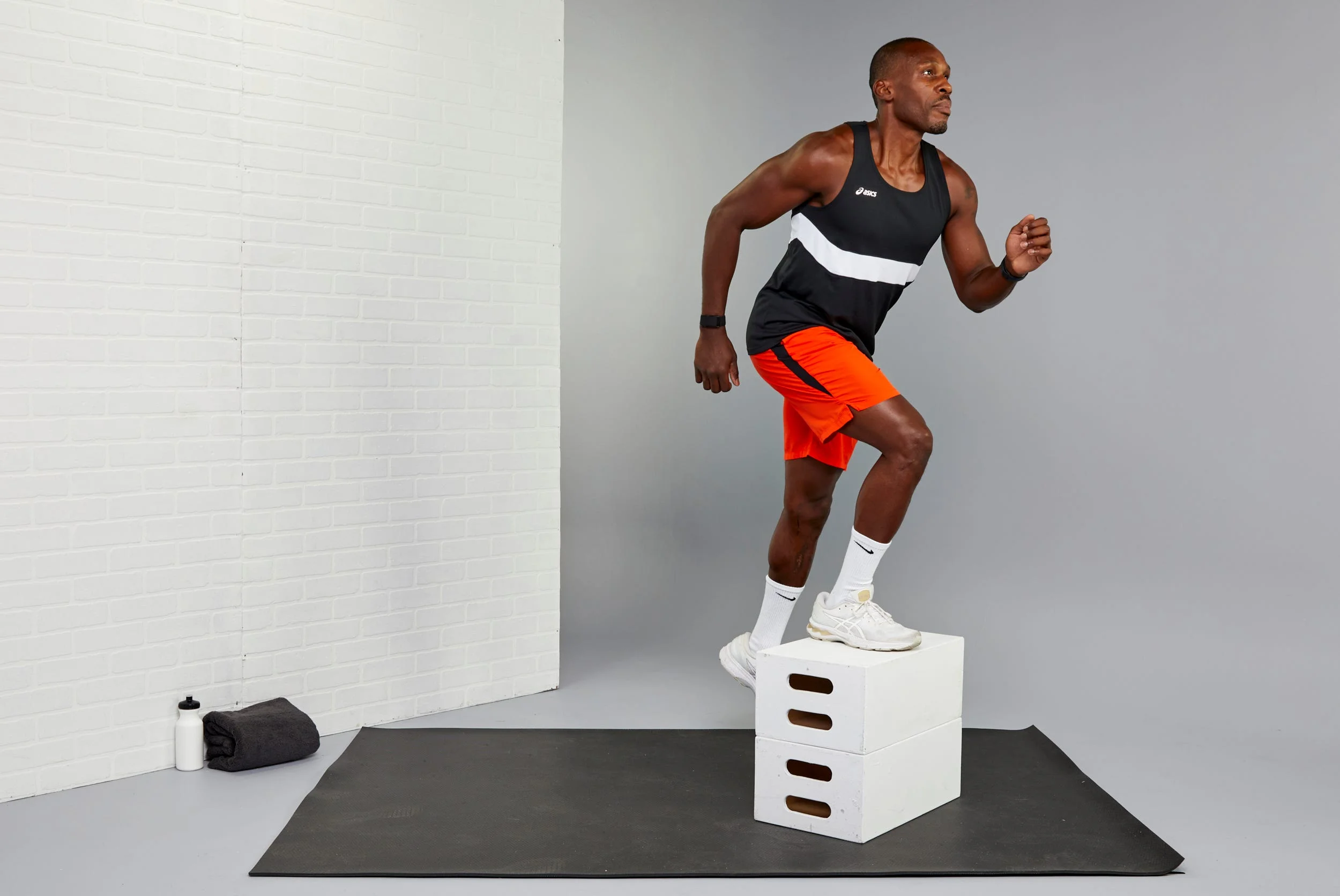 Photo by Joshua Simpson
Why This Exercise Works:
Step-ups echo the same motion as high-knee marches but elevate it by introducing an elevation component, creating an additional challenge as noted by Coviello.
Steps:
- Position yourself in front of a step or box, feet hip-width apart and hands on your hips.
- Step up with your right foot, bending your knee to about a 90-degree angle.
- Push through the right foot to lift your body up while bringing the left foot onto the step.
- Lower the left foot back down to the ground and return to the starting position.
- Complete all repetitions on one side before switching to the other.
Rethinking the Approach to Running
The insights and programs highlighted here represent a significant intersection of fitness and personal development for runners at every level. From guides on improving running form to mental health resources tailored for runners, this content effectively addresses both physical training and psychological well-being.
What stands out is the comprehensive nature of the offerings. Programs like *Running for Weight Loss* and *How to Start Running* aren't just basic guides; they point to a growing recognition that running can be profoundly transformative. These resources provide structured pathways for beginners while also bolstering seasoned runners seeking to refine their technique—an indication of the diverse needs within the running community.
Here's the thing: these campaigns don't just encourage participants to get active; they recognize that running is often undertaken for greater goals—health improvements, weight management, or even mental clarity. If you're working in this space, understanding this dual focus is crucial.
The variety in the content—from strength training to strategies for mastering the elusive run-walk method—demonstrates an awareness that one size doesn’t fit all. Each program is crafted with specific audiences in mind, reinforcing the notion that runners are not a monolith. It’s about providing tailored advice that resonates.
And yet, one wonders whether there’s an opportunity to further integrate community engagement within these programs. Motivating individuals is one challenge, but fostering a supportive network could amplify the outcomes. This isn’t about simply hitting mile goals; it’s about building a culture of encouragement and connection among runners, an approach that could prove invaluable for fostering long-term commitment.
So, as we look ahead, the running community stands at a promising juncture—one where mental and physical training converge to enhance the experience. As these resources continue to evolve, they could pave the way for a richer, more supportive atmosphere for runners everywhere.