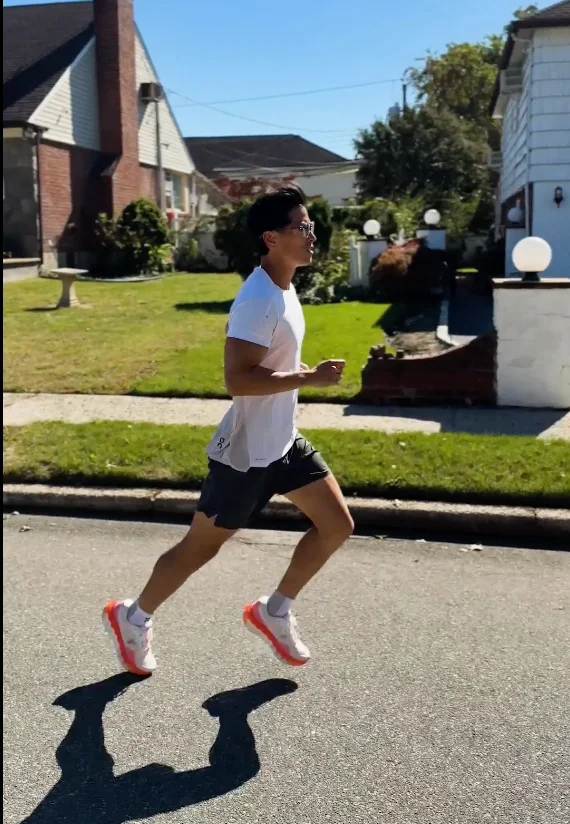
Jonathan Basalyga, a 53-year-old runner from Atlanta, has transformed his athletic journey by integrating structured training techniques after years of casual running. Having always enjoyed running since his childhood, Basalyga's passion waned in his 20s as he shifted focus to family and career. His rekindled love for running emerged when a colleague encouraged him to train for a marathon in 2005, where he completed the Baltimore Marathon in a respectable 4:52.
Back to Basics
Years spent juggling family commitments and a career had led Basalyga to run without a clear purpose. His earlier running exploits were casual, more about enjoyment than competition. As he transitioned back into running, he sought to recapture that initial joy while also finding a new challenge to motivate himself. The marathon served as a catalyst, rekindling not just his love for running but also an unyielding competitive spirit that had simmered during his years of casual jogging.
Inciting Competition
His journey into competitive running took an interesting turn when he participated in various short races alongside his family. These experiences awakened a dormant competitive drive, especially when he found himself outpaced by his son in a 5K. This loss wasn’t just a moment of disappointment; it was a pivotal point that forced him to reevaluate his training strategy. For the first time, he questioned whether the traditional approach of logging high mileage was enough. It became clear that to compete seriously, he needed to incorporate speedwork. His former routine—averaging about 40 miles a week without any formal structure—was inadequate for the goals he now aspired to achieve.
Incorporating Speedwork into Training
Basalyga's journey into structured speedwork began after he introduced intervals into his marathon training, specifically adopting the Yasso 800s. It was a revelation. He vividly recalls his first attempt during his daughter's soccer practice, realizing for the first time the exhilaration that comes with intensive running. The intervals allowed him to experience running in a completely new light, testing his limits in ways he hadn't encountered before.
After achieving a personal record of 3:54 at the 2015 Quebec City Marathon, he decided to focus on improving his time in shorter races. Recognizing the importance of speed training, Basalyga turned to formats like the 10x400 workout, famously favored by Roger Bannister. Initially skeptical about its effectiveness, he later embraced the challenge and found it transformative. The workout didn't just push him physically; it awakened a mental resilience he hadn't tapped into before, making him feel a workout intensity he had never experienced previously.
Significant Improvements and Mindset Shift
Incorporating the 10x400 workout into his weekly routine paid off dramatically—he managed to achieve a sub-21 minute 5K, slicing off over four minutes from his previous best times. This newfound speed not only showcased his running capabilities but also altered his mindset. He began to perceive himself as a serious athlete rather than just a casual runner. This shift in identity played a crucial role in motivating him to pursue excellence beyond mere participation.
To maintain this newfound speed, Basalyga presently engages in a tailored program comprising one long run, two shorter runs, and an additional speed or hill workout weekly, all of which keep him engaged. He also emphasizes strength training, ensuring a balanced fitness regimen that supports his running goals. With this multifaceted approach, he isn't just building speed; he's preparing his body comprehensively for the demands of rigorous competition.
Future Aspirations
Basalyga continues to push his limits, stating that his recent training focus has led to greater motivation than ever. His next targets are ambitious: to clock a sub-20:30 5K next year, with an ultimate goal of achieving under 20 minutes by the time he turns 55. If you’re working in this space, you know that setting such lofty goals serves both to inspire oneself and to create a commitment to hard work. He recognizes that achieving these milestones will require more discipline and a structured approach than he’s previously applied. This isn't just about racing; it’s about transformation.
Implications and Future Outlook
Ultimately, Basalyga's journey underscores a vital aspect of athletic development: the importance of structure and purposeful training. It's more significant than it looks. We often overlook how fundamental shifts in training philosophy can pave the way for remarkable personal achievements. His transformation isn't just about speed improvements; it’s a reminder of how redefining one's approach can lead to a richer identity as an athlete. That said, it will be interesting to see how Basalyga navigates the potential physical challenges that come with pushing age-related boundaries in pursuit of these goals. His story serves both as motivation and a case study for others considering how significant a small shift in approach can be in the athletic pursuit.