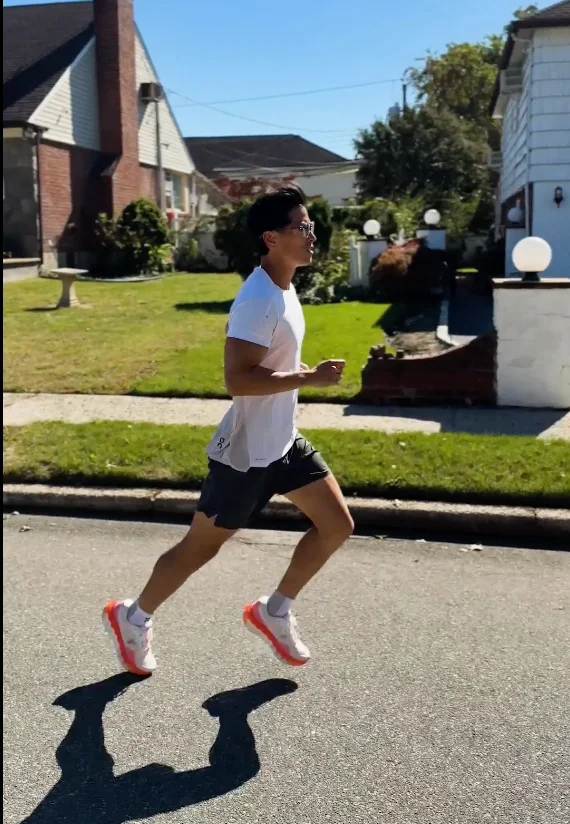
My half marathon results made one thing clear: speedwork can help a run/walker get faster, but a plan that feels intimidating is hard to stick with. I learned that the useful question isn’t whether to run hard. It’s how to add intensity in a way you can repeat.
While training for my first half marathon in summer 2025, my average run/walk pace was 16:00 per mile. I wanted to move faster, but I wasn’t ready to hold a quicker pace. I followed the Runner’s World Beginner Run/Walk plan, built consistency, and gradually increased my distance. By race day, my average pace was 13:51. Better, but still slower than I hoped.
For my next race, I tried the Runner’s World break 2:30 plan, which included weekly half marathon pace sessions. I often couldn’t hold the prescribed pace, and sometimes skipped the workout altogether. The sessions made me anxious. They also helped: I finished that half marathon in 2:48:54, more than 10 minutes faster than my previous time.
That improvement persuaded me to try again while training for the Copenhagen Half Marathon. I signed up with Runna, an app that builds training plans around your schedule. Its first plan gave me rolling 800-meter repeats in week one. After my earlier struggles, that felt like too much, so I retook the questionnaire—asking for a plan with less speedwork. It took several attempts to get one with speed sessions every other week, a rhythm I could live with.
As a run/walker, I also had to reconcile the length of each running interval with how long I could comfortably run before walking. Those timings didn’t always match, and the workouts could seem out of reach. Still, I found a way to work faster running into my routine. At Copenhagen, I finished in 2:38:03—another 10 minutes off my prior time.
That’s the part of speed training that can get lost in advice focused on target paces: the plan has to feel workable enough that you’ll keep showing up. Here’s how I got more comfortable with intensity, what coaches recommend, and why faster running can matter even if you’re preparing for a half marathon with walk breaks.
How I Overcame My Fear of Intensity
Speed sessions can unsettle even experienced runners, says Danielle Hirt, a NASM-certified personal trainer and RRCA-certified run coach. Her first suggestion is to set aside pace for a moment and think in three effort levels: easy, medium, and hard. “Most people don’t know their level of difficulty because they’re not willing to explore that discomfort,” she says. In other words, learning what hard feels like can make a structured workout less mysterious.
I found it easier to handle the work when I could see a full session in advance and hear audio cues telling me when to change intensity. Runna’s guidance helped me judge whether a pace felt manageable, which built my confidence over time. The bigger shift was accepting that “hard” didn’t have to mean panicked or all-out.

If you’re new to running or speed training, Hirt recommends beginning with strides: short accelerations, usually 20 to 30 seconds, added midway through or near the end of an easy run. They can help you connect effort with good form. Start with at least three, build toward five over a few weeks, then try hill strides before moving on to other workouts.
For runners who already have a fitness base but feel nervous about intervals, Stephanie Kessell, an elite marathoner and Runna’s head coach, suggests making the first repetition about 10 seconds slower than your target. If you’re aiming for 8:50 pace, for example, start at 9:00 and speed up on later reps if you feel strong. That gives you room to settle in and learn what the session demands.
“I think a lot of people, who are new to intervals, give themselves a hard time because they’re maybe falling off the paces—faster or slower—and they just want to feel that they can get the pace right,” Kessell says. “The more pace work you do, the more confident you’ll be at executing a certain pace.”
Why Speedwork Matters for Half Marathoners
Speed training often gets associated with shorter races like the 5K and 10K. But it can also serve runners preparing for a half or full marathon, including people who use run/walk intervals. The point of speedwork during half marathon training isn’t just to chase a faster split. It can help improve coordination, control, and strength, Kessell says. Strength training, mobility work, and form drills can support those gains too.
A walk interval is an opportunity to reset form and breathing—it’s not a break.
Faster running also increases the load on tendons. Kessell describes tendons as springs: they store energy when your foot lands and release it as you push off. Running faster increases the forces moving through them, giving the body a stimulus to adapt. With enough recovery between sessions, tendons can become better able to handle those loads.

That adaptation depends on balance. Running hard in every workout can raise the risk of overtraining and injury, so speed belongs in a varied plan. Mine mixed intervals—including 800-meter repeats and combinations of 1K and 200-meter repeats—with tempo runs and long runs that included miles at race pace or faster. Speed sessions came every other week. That range helped develop my pace and build speed endurance, so I could sustain quicker running for longer, Kessell says.
I also noticed a change in my form. On longer runs, I’d often feel tension gathering in my shoulders. As training progressed, my posture felt stronger and more relaxed, even when I picked up the pace. Hirt says shorter speed sessions can help runners build strength and resist the form breakdown that may come late in a longer race. It’s the reasoning behind “fast before far.”
By the time I was deep into training, I no longer dreaded speed workouts. I saw them as one tool for reaching my goal, not a test I had to ace every time. That change made it easier to keep going—and to get faster.