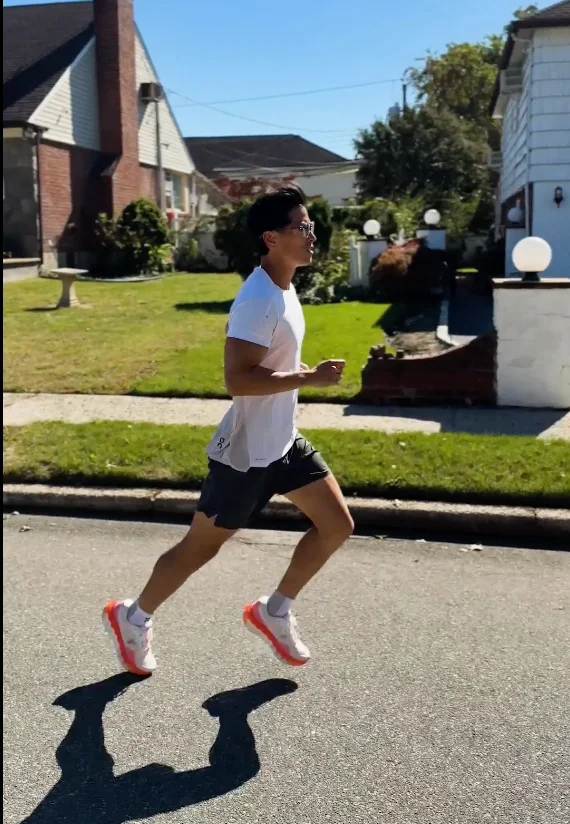
Grace Nolan’s promise as a distance runner was only one part of a life shaped by medicine, mentorship and close ties to her community. The 25-year-old Oakland University medical student died early Saturday after a car accident in Walled Lake, Michigan, the night before she was due to race the Detroit Free Press Marathon. The timing placed her death beside an event she loved, but the people remembering her have described a life whose meaning extended well beyond any finish line.
Nolan’s boyfriend, Matt, was also in the car. Her family said in a Facebook post that he sustained significant injuries, survived and was expected to recover. The family’s account offers the available details about his condition; the loss, meanwhile, came as Nolan’s relatives and the running community were preparing to see her return to Detroit.
Her father, Jason Nolan, remembered a daughter whose roles extended far beyond sport. “Daughter, sister, girlfriend, friend, mentor, scholar, athlete, comedian....those are just a few of the ways to begin describing Grace,” he wrote, calling her “truly extraordinary.” His list reads less like a résumé than a portrait of someone who moved among family, study, athletics and service without being defined by any one of them.
A return to the race that made her love marathons
The Detroit race had become a favorite after Nolan’s marathon debut there in 2025. She placed fourth despite entering the distance during her first semester of medical school, when she later said she was “stressed and severely sleep deprived” and didn’t know much about marathon training. That combination makes the result striking, but her own account suggests the experience mattered for reasons beyond placement: she found the race enjoyable enough to want to come back.
That experience left her eager to return. “I had the most fun I have ever had in a race that returning to this race wasn’t even a question!” she said in comments shared with organizers ahead of this year’s event. A marathon can be a test of preparation and endurance, yet her words describe something less measurable: the atmosphere and experience made the distance feel worth repeating. This is more significant than it looks. Her connection to the race was personal before it became part of the public tributes following her death.

Accomplishments beyond the marathon
By the time she planned to return to Detroit, Nolan had joined Michigan-based Gazelle Elite and was training with more structure. Her parents told the Detroit Free Press she privately hoped to run an Olympic Trials qualifying time. That ambition gives a sense of how she viewed her running: the marathon was one part of a longer athletic effort, supported by a more deliberate training routine. The goal was private, her parents said, which also underscores the distance between an athlete’s public results and the ambitions she may share only with those closest to her.
At Oakland University, she earned first-team All-Horizon League honors in cross country three times. In 2025, she won the conference 10,000-meter title in a meet-record 34:17.44. The university also named her its nominee for NCAA Woman of the Year. Those honors span individual performance and institutional recognition, but they don’t tell the whole story of what her teammates and classmates may have experienced day to day.
Her studies were just as central to her plans. Nolan was in her second year at Oakland University William Beaumont School of Medicine, after completing undergraduate and public health degrees at Oakland. She hoped to become a cardiologist, volunteered as a phlebotomist at free clinics and worked with Girls on the Run to introduce young girls to the sport. Taken together, those commitments point to a career she imagined as both scientific and service-oriented. If you’re working in this space, the combination is a reminder that medical training and community work often depend on the same habits: patience, attention and a willingness to show up for other people.
“She wanted to be a doctor from a very young age, and she made it happen,” her mother, Wendy Nolan, told the Detroit Free Press. Wendy described her as “the most curious, angelic, intelligent, loyal, incredible person.” Jason said she “painfully understated every part of her life.” That description suggests a person who did not make a performance of her achievements, even as they accumulated across school, sport and volunteering. Quietly accomplished.
A legacy measured in people reached
The Detroit Free Press Marathon paid tribute to Nolan on Instagram, saying her influence reached beyond racing: “Grace, thank you for the light you brought to every start line. You will always be part of this race.” The tribute draws on the language of the event, but it also reflects how a running community remembers its members: through shared participation, encouragement and the traces people leave in the routines of others.
Her work with Girls on the Run makes that reach especially tangible. Introducing young girls to running means helping them encounter the sport as a place to build confidence and connection, as well as a place to compete. The source accounts don’t quantify how many people she mentored or describe individual outcomes, and there’s no need to turn that work into a number. Its value lies in the commitment itself.
Her family planned a celebration of her life at Oakland University on October 31. Jason described it as a celebration of Grace’s “remarkable 25 years of life.” That framing holds together the parts of Nolan’s story that might otherwise be treated separately: a promising runner, a medical student, a volunteer and a presence in the lives of family and friends. Here’s the thing: the race she was meant to run is an especially visible point of remembrance, but the broader legacy is found in the people she supported and the work she intended to continue.
And yet, the planned return to Detroit remains a stark measure of what was lost: not only another race, but the next chapter of ambitions she was pursuing across sport and medicine. The tributes cannot complete those plans. They can show why so many people feel her absence.