Nike and Hyperice have turned the recovery sandal into a piece of wearable therapy. The Hyperslide pairs a cushioned slide with heat and vibration, aiming to ease foot tension, encourage relaxation, support flexibility, and help with everyday recovery. That’s a more practical pitch than the companies’ $799 Hyperboot. At $249, the Hyperslide is positioned for everyday athletes—and, in my testing, it makes a persuasive case for itself.
The obvious question is whether the heat and vibration feel useful in practice. They do. But the details matter: wearing socks improved how well the warmth reached my feet and helped them stay in contact with the sandal, making the vibration more noticeable. The slides are comfortable enough to wear around without activating either feature, too. That gives them a second life as ordinary footwear, which helps justify a product built around recovery.
For context on percussion therapy, see our guide to percussion therapy devices.
How I Tested
The Air Zoom Hyperslides have soft ridges and a cushioned footbed. I tried them barefoot first, then followed the included card’s advice to wear socks. The difference was easy to feel: warmth came through more effectively, and the closer fit seemed to carry the vibration better. If you’re considering these as recovery gear, that small adjustment changes the experience.
The Hyperslide’s strongest case is practical: you can wear it while getting on with your day. Battery life is the tradeoff. With heat and vibration both set to their maximum, I got about an hour, in line with the companies’ estimate. Vibration alone can run for up to eight hours.
There are three vibration settings—50, 75, and 100 Hz—and three heat levels: 109, 113, and 117 degrees Fahrenheit. After trying different combinations, I preferred the lowest vibration setting with medium heat. That was comfortable for wearing around the house or running errands. Each recovery cycle lasts 15 minutes; to start another, you have to stop and reset the pods, the detachable units that contain the controls and batteries. The Hyperice app can also be used to continue.
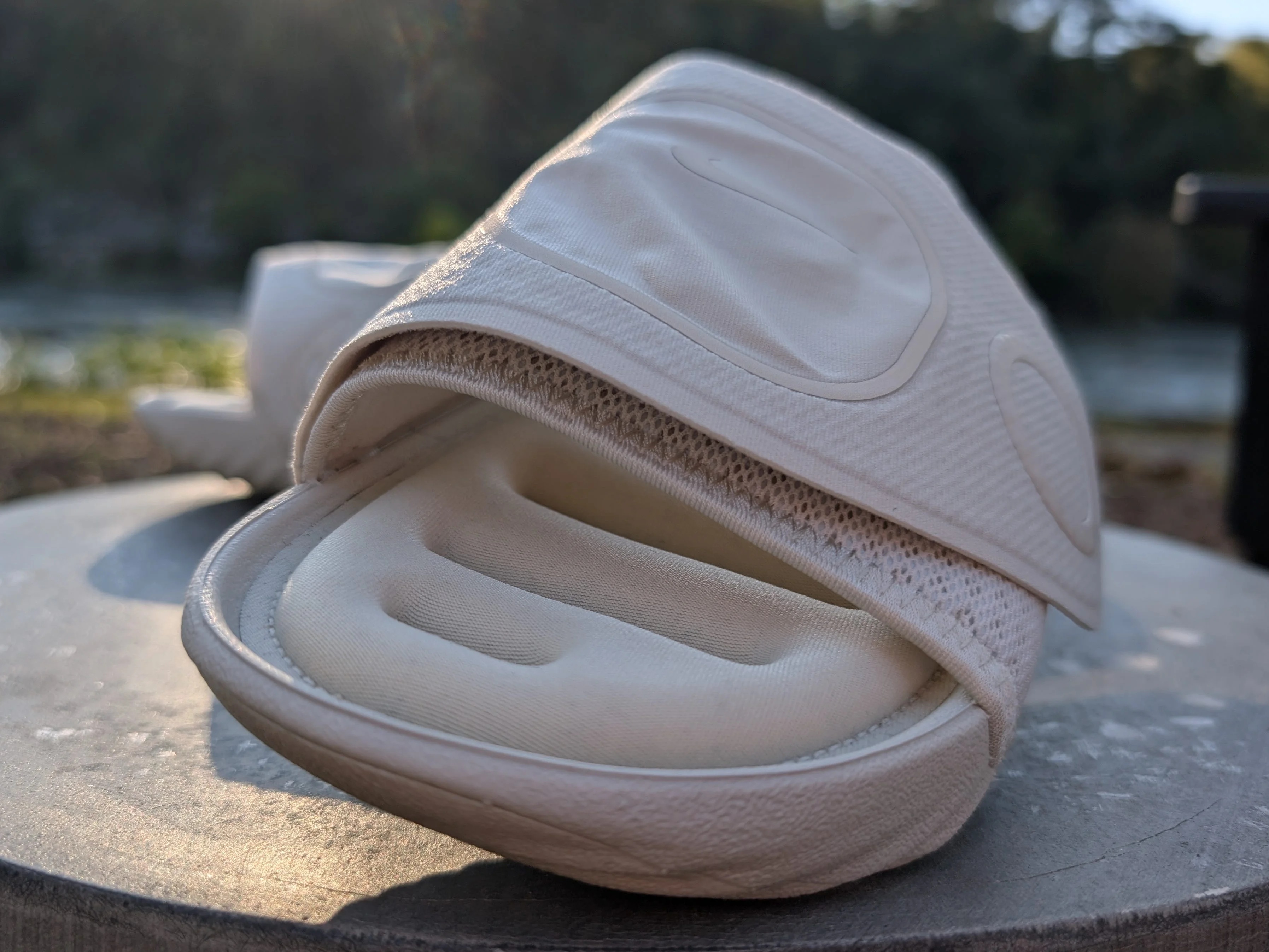
I also tested the slides on a flight to check the company’s claim that they’re TSA-compliant. The lithium-ion batteries that fit inside the straps must stay out of checked luggage because they’re portable electronic devices. I travel with a carry-on, so I kept the slides there and packed the batteries and charger in my backpack. I wasn’t stopped for a bag check.
Setup and everyday use
The package includes two Hyperslide Pods and a two-pronged USB-C charger, which charges both pods at once. Once charged, each pod attaches magnetically beneath an adjustable Velcro strap.

You can adjust heat and vibration with the pod’s physical controls or through the Hyperice app. A bright red “H” lights up on the slide when the pods are on. Try a few settings before settling in; using more heat and vibration affects runtime.

Here’s the part that makes the design more useful than a recovery gadget you have to sit still to use: I wore the slides while making coffee, driving to the grocery store, and getting around after a day of travel. I also used them before a walk or jog and a yoga class.
Who should buy the Hyperslide?
The Hyperslide makes the most sense if you want heat and vibration built into footwear you can wear around town, on a commute, or while traveling. Athletes and marathon runners in training are obvious candidates, but the appeal also extends to people curious about fitness tech. The slides come in black and Orewood Brown.
I wore them to a business convention, through an airport, and around a hotel lobby. People responded positively to the idea: portable recovery in a familiar, wearable form. That reaction doesn’t tell us how much the slides improve recovery, but it does point to their clearest strength. They’re easy to use as part of ordinary life, even when you don’t have time to stop and sit down.
Buy the Nike Air Zoom Hyperslide: nike.com | hyperice.com | bestbuy.com
Jamie Sorcher, Senior Reviews Editor, joined the Hearst Enthusiast Group in 2021. She has covered technology and consumer lifestyle gadgets since 1995, including work in print, digital, and broadcast. She originated the role of The Gizmo Girl for ESPN’s Cold Pizza and has written for TWICE, Sound & Vision, and Consumer Reports, among other publications.