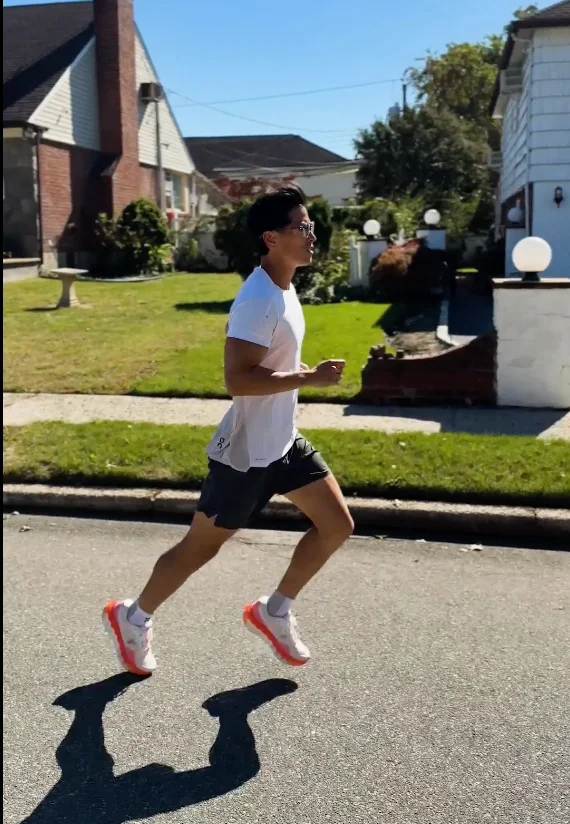
Runna’s training plan gave me a faster half marathon, but its first schedule also showed why an app-generated program needs a runner’s judgment. The opening week included 800-meter repeats and a progression run—more intensity than I wanted to take on at once. By adjusting the plan’s settings and adapting its workouts to my needs, I trained for the Copenhagen Half Marathon and finished more than 10 minutes faster than my previous half.
I came to the app looking for structure: a routine that could fit in speedwork, strength training and mobility. As a newly RRCA-certified run coach, I expected an orderly build: easy runs first, then short intervals or strides, followed by more structured sessions. Runna’s initial schedule didn’t match what I was doing, and I wasn’t sure it reflected my fitness.
That hesitation wasn’t a reason to abandon the app. It was a reason to revisit the setup and find a version I could follow consistently. Personalized plans can help runners who want more guidance but aren’t training with a coach. The useful question is how to make the schedule fit your current capacity, rather than treating every prescribed session as fixed.
Set a realistic starting point
Runna builds a plan from answers about current fitness, weekly mileage, injury history and race experience. Stephanie Kessell, an elite marathoner and Runna head coach, advised answering based on what you’re doing now, not what you think you could manage. The plan can be adjusted later as training unfolds.
I selected three running days a week and entered my second half marathon time: 2:48:54. I’d run that race about a month before beginning the Runna plan. Using those details and my other answers, the app created a 14-week schedule and estimated a finish between 2:25 and 2:35.
I repeated the questionnaire with slightly different responses, hoping to postpone the speedwork. That didn’t remove the first workout. What did change the schedule was switching training volume from “progressive” to “steady,” and difficulty from “balanced” to “comfortable.” The app then scheduled speedwork every two weeks instead of weekly and estimated a finish between 2:30 and 2:40. That target felt more appropriate, so I committed to the plan.
Use the plan as a guide to effort
A warmup helped me get into the workout sooner. When I skipped it or kept it brief, it could take a couple of miles before running felt comfortable; after 10 minutes of preparation, I settled into pace more readily. Kessell says a warmup helps the body move from rest to harder work. She recommends dynamic stretches, followed by walking or light jogging.
Runna includes warmup suggestions, which I followed. They addressed areas that tend to feel tight for me, including calves and hips: a standing calf stretch with one foot behind, and “open gates,” which involves lifting a knee to hip height, rotating it outward and lowering it. The routine can be tailored to the runner, but the practical point is simple: build in enough time to ease into a demanding session.
Pace targets are another starting point, not a substitute for paying attention. I used rate of perceived exertion (RPE), a one-to-10 scale where 10 represents all-out effort, to judge how a pace felt. That helped account for conditions and recovery: poor sleep, nutrition, rain, wind, heat and humidity can all make a target pace feel harder. Runna can adjust targets for heat and time of day, but I still needed to assess my effort during the run.
Recovery between workouts matters just as much. Some soreness after a hard session is expected, Kessell says, while large jumps in mileage or intensity can contribute to aches and pains. Persistent fatigue and tired legs week after week may mean it’s time to reduce intensity, mileage or running days. If pain signals a need for a break, Kessell advises seeing a medical professional.
There’s a case for progressing, too. If you’re recovering well and consistently beating pace targets for a couple of weeks, the plan may need a change. Runna recommends adjustments when a runner misses or exceeds targets for more than three consecutive runs, but the user decides whether to accept them. Feeling ready—or worn down—is part of that decision.
Make run/walk intervals part of the workout
Runna doesn’t offer an advanced plan specifically for runners using the run/walk method on race day, but I could still use my preferred intervals in its workouts. I ran for three minutes and walked for one on easy days; on hard days, I used 90 seconds of running followed by 30 seconds of walking. Testing different run/walk intervals before the training cycle helped me choose ratios I could sustain.
HOW TO FIND YOUR RUN/WALK INTERVALS
I used the Simple Interval Timer app to track each segment because Runna doesn’t include a timer for run/walk breaks. Within Runna, I chose a time-based approach to workout targets, so the app could prompt me to speed up or slow down. For runners with a time goal, Kessell recommends switching between time and feel to learn what the target pace actually feels like. In the app, that setting is under “manage plan,” where users can change the units of measure.
Let recovery bridge one race to the next
After the Copenhagen Half Marathon, I followed Runna’s postrace recovery plan. It gave me room to return to running without immediately chasing another goal. Nearly all the runs were 30 minutes or less: enough to keep me moving, without making every outing feel like another test.
My read is that the app worked best when I treated its structure as adjustable. Honest setup answers, a manageable schedule and attention to effort made the training more sustainable for me. The finish-time improvement came over 14 weeks, but the useful lesson for the next cycle is ongoing: a plan has to fit the runner who is actually doing the work.

Monique LeBrun is a health and fitness editor who is based in Easton, Pennsylvania. She covers a wide range of health and wellness topics, with a primary focus on running performance and nutrition. Monique is passionate about creating content that empowers runners to become the best versions of themselves. As an avid runner and parent, she loves spending time outdoors with her daughter, who often accompanies her on weekend runs as her personal mini run coach.