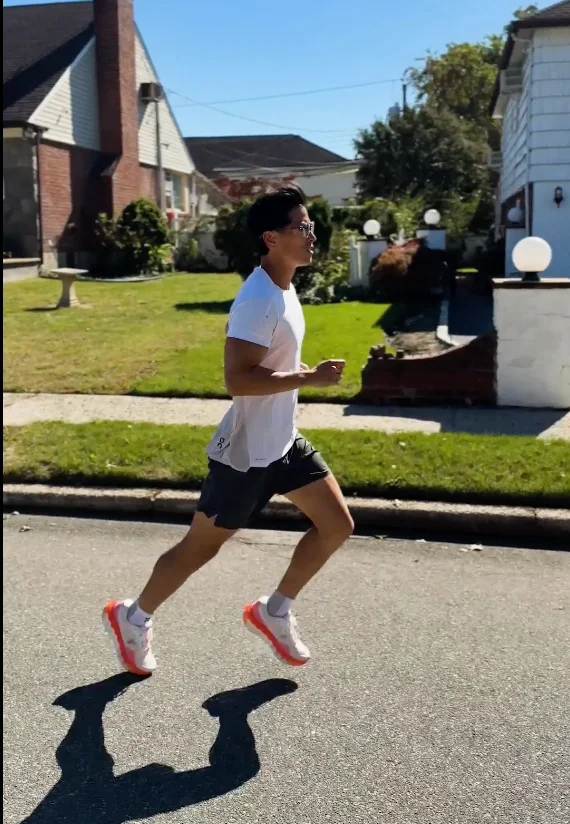
The record made Conner Mantz famous. The injury that followed is testing what he does with that fame. He set the American marathon record in Chicago, then rushed back into training and spent 12 weeks sidelined with a sacral stress fracture. The gap between those two moments says more about elite running than a finish time alone: even a breakthrough can leave an athlete wondering what he has left.
On a cold February night in Mapleton, Utah, Mantz and his wife, Kylie, are talking about a crack in the ceiling of their new four-bedroom, 4,500-square-foot house. Kylie spotted it just before the one-year warranty expired. The couple, who are expecting their first child, have boxes left to unpack and little on the kitchen counters. A sign quoting Joshua 24:15 sits in the bright, mostly bare interior.
The domestic details make Mantz’s ambitions feel both close and oddly distant. He and Kylie cook pasta, talk about running, and debate a home repair. Yet he’s already looking toward the 2028 Los Angeles Olympics, where he hopes to race the marathon, win a medal, and improve on his personal best: 2:04:43, the American record.
There’s an art TV on the living-room wall, a Christmas gift from Conner to Kylie. Samsung’s Frame can display artwork from a large library, disguising the screen as a framed picture. They’ve yet to choose an image. “Which makes it kind of funny that we bought it!” Kylie says, tipping frozen broccoli onto a baking sheet. They rarely watch television, and the screen hasn’t shown Monet—or the 2026 Winter Olympic Games, already underway that February. Maybe the Summer Games would be more tempting.
That record in Chicago was more than two decades in the making. Khalid Khannouchi set the previous American mark in London in 2002. Mantz said he would break it, then did so on a crisp October morning in Chicago, finishing fourth. Kenya’s Alex Masai was third, just six seconds ahead; Mantz ran nearly a minute faster than Khannouchi’s old record.
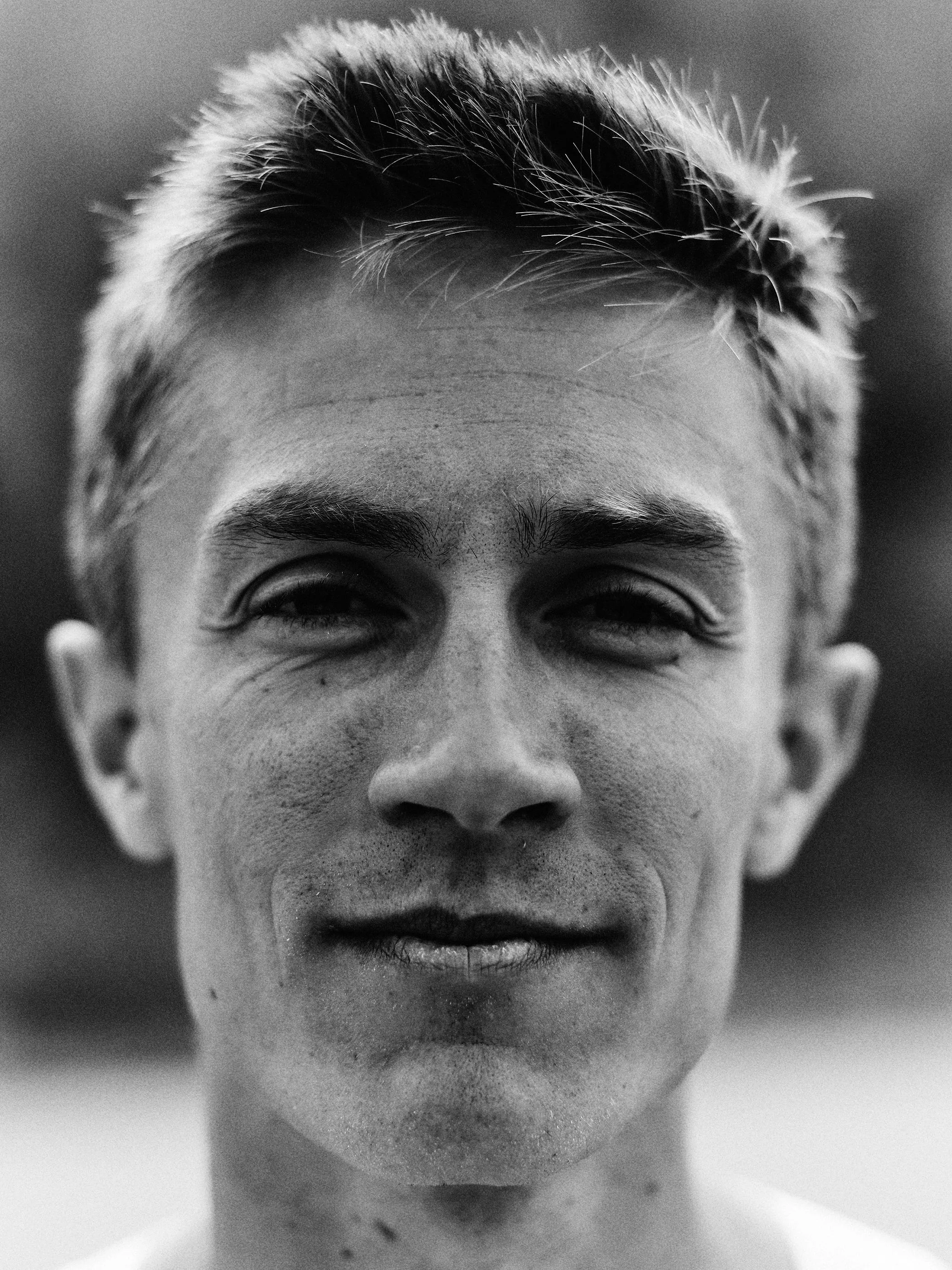
He didn’t collapse at the finish or throw his arms skyward. Mantz stopped his watch, shook hands with competitors, and drank some water in Nike Alphaflys and short blue shorts. The record was history, but his reaction was subdued. He says he expected more from himself and from the time. “I just felt like I had more in me,” he says over dinner, moving Italian sausage around a pan as Kylie blends cottage cheese into tomato sauce for extra protein. “I was a little bit kicking myself.”
What he wants is a place on the podium, ideally at the top. The record hasn’t changed that. If anything, his injury has made the distance between a national mark and a global medal harder to ignore.

Learning to start again
The next day, over lunch at Ginger’s Garden Cafe, Mantz is still rebuilding. A sacral stress fracture kept him from running for 12 weeks. He swam laps indoors, went to physical therapy, and watched friends’ running posts while his own mood sank. He’d returned to training too soon after Chicago, excited by how little soreness he felt and focused on winning a medal at the January 2026 World Athletics Cross Country Championships in Florida. He wasn’t following his coach’s guidance.
“I got too excited,” he says. Chicago now feels distant, almost unreal. “I actually don’t even feel like I broke the American record.” The injury, he says, was humbling: “Just in case you think you’re the man, now you’re not even walking.”
He’d been running outside again for only two weeks. On a winter morning, he covered 20 miles on the Provo River Parkway Trail at an average 5:45 pace and 4,500 feet of elevation, according to Strava, where he has more than 60,000 followers. The effort felt like a slog. “My couch was calling,” he says. Kylie drove him to lunch. “I’m just glad I get to sit.”
The setting offers few obvious distractions. Provo’s foothills have rock supply yards, dentist offices, and a quilting shop. A beer or coffee isn’t part of the usual plan in this predominantly LDS community, where the Church of Jesus Christ of Latter-day Saints’ teachings prohibit alcohol and caffeine. The local theater was showing Peggy Sue Got Married; a children’s birthday party had taken over Clint’s Reptile Room.
I’d even asked Mantz whether I could join him in the sauna after a run. He politely declined. He typically spends at least 20 minutes there, but coed saunas aren’t the norm at Brigham Young University, where he competed and still trains under coach Ed Eyestone. Mantz won two NCAA Division I cross-country championships at BYU. He met Kylie in a religion class during his junior year. When I asked what first drew him to her, he laughed: “She’s a lot more interesting than me.”
At lunch, Kylie is the more spontaneous conversationalist. She also has running credentials of her own: she walked on to BYU’s track team as a senior and ran her first marathon last year in 2:43:49, with Mantz beside her. He orders a turkey club with “facon bacon,” though he’d rather be eating jollof rice or fufu, a dough made from cassava and plantains and served in soup. He first tried both during his two-year LDS mission in Ghana, which began after he graduated high school in 2015.
Food was part of the story of that mission, but not the whole story. Mantz gained 30 pounds in eight months, going from a lean 120 pounds to 150. He says stress played a part: a tightly controlled schedule, long days knocking on doors, and the emotional weight of listening to strangers’ troubles.
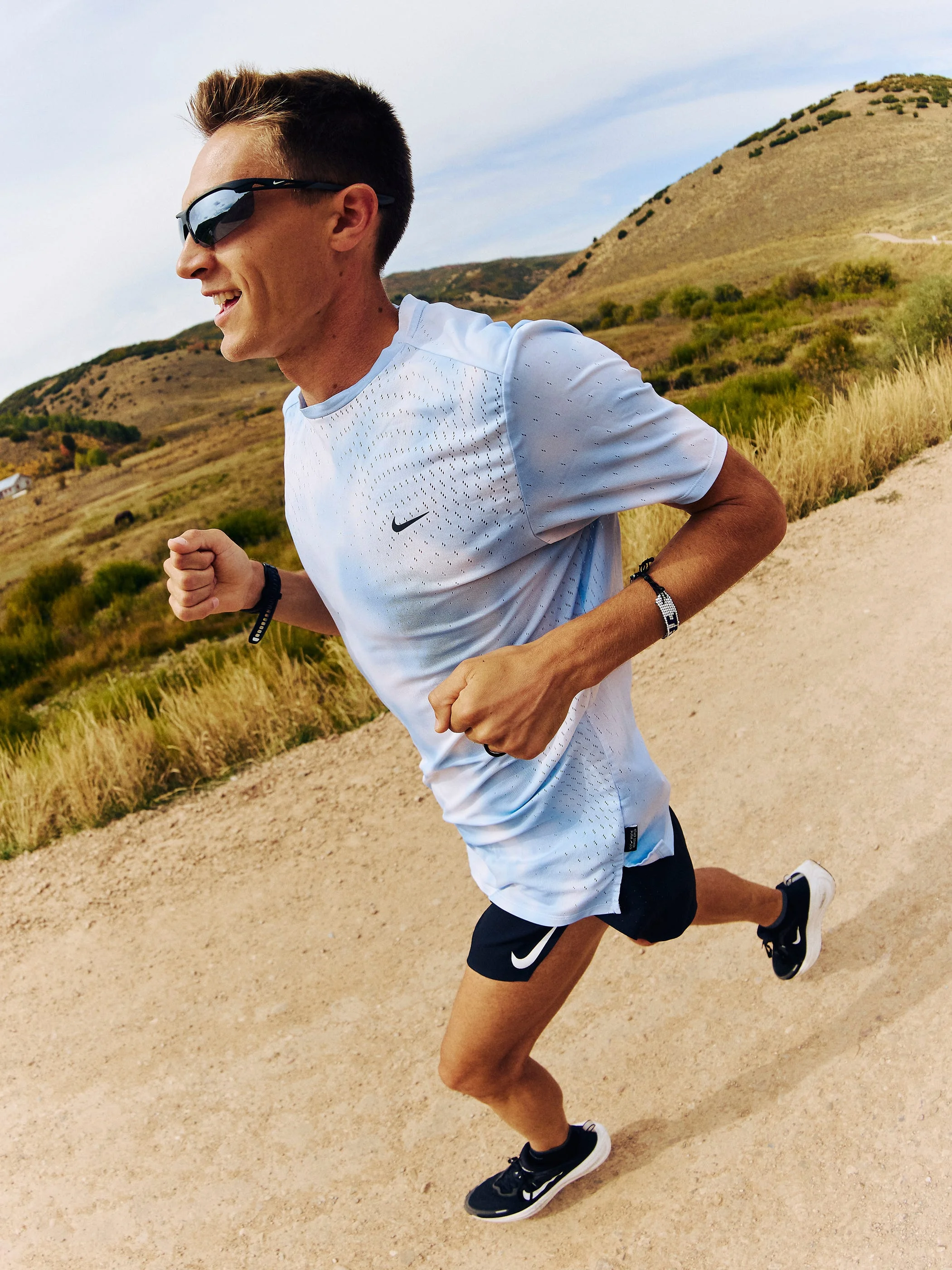
He also stopped running for the first time since childhood. His missionary companion didn’t run, and the two were required to stay together around the clock. “He didn’t do anything!” Mantz says, glancing at Kylie. She nods. It’s clearly a familiar complaint.
The routine was simple: wake up, put on a white shirt and tie, walk, knock on doors, talk, sleep, repeat. Mantz loved the people he met and their generosity, though the schedule wore on him. At the same time, he found relief in having one purpose. With no phone and little contact with the wider world, he wasn’t thinking about school, money, friends, or family. He didn’t follow the news. Returning to the United States two years later was a shock; even his jeans belonged to an earlier version of his life.
Coming home meant adjusting to American life, running again, and getting his body back. For Mantz, the ordinary routine that followed was no less disciplined: the daily repetition of a world-class distance runner.
A life built around focus
Eyestone describes LDS life as governed by rules, including the BYU Honor Code: no smoking, no alcohol, and no premarital sex. “A third of my student-athletes are married,” he says with a laugh. He also pushes back on the familiar caricature. “We’re not wearing bonnets and driving around in covered wagons!”
For Eyestone, the faith’s structure can suit athletes. A simpler social life may leave more room for training, and BYU and Provo have become appealing to runners pursuing college or professional careers, whether they’re religious or not. “Once people realize it’s very doable, that it can actually enhance not just their running life but their overall life, it can be a really positive thing,” he says. The appeal, in his words, is that it “keeps things simpler.”
Mantz has been focused since he was five, when he announced he’d make the Olympics without knowing exactly what that meant. He was the fastest kid at recess. At nine, after watching his father—a former college wrestler—and older brother run a half marathon, he asked to try one himself. His parents said no. At 12, they relented: he ran 13.1 miles in 1:33:27, then improved to 1:22:43 a few months later. By 14, he’d cut his time to 1:11:24 at the Utah Valley Half.
Eyestone noticed him at a BYU summer camp for young runners, where Mantz was the youngest in the leading group and already pushing the pace. Some campers were beginners; others, Eyestone says, were “child prodigies.” Mantz was one of those—running more than anyone else.
Conner Mantz’s career makes a case for consistency, but the numbers alone miss what keeps it going: a team, a routine, and an appetite for a race that’s never quite perfect. His path to BYU began with a promise. After graduating from Sky View High School in Smithfield, Utah, in 2015 as a three-time Foot Locker Cross-Country Championship All-American, he had his choice of colleges and considered Princeton. BYU had less track-and-field prestige then than it does now, but Mantz had already verbally committed to coach Ed Eyestone, a BYU alumnus and two-time Olympic marathoner. Before leaving for Ghana, Mantz asked his father whether he should reconsider. His father reminded him that he’d given his word. Mantz kept it.
He redshirted his first year, then became a force at BYU. At the 2020 NCAA Cross-Country Championship, held in March 2021, he ran alone across the Oklahoma plains with roughly 250 competitors behind him. Two leaders were still ahead. Mantz caught and passed them, winning the 10K by more than 20 seconds. He was the first American to take the title since Galen Rupp in 2008. Later that year, he set a course record at Apalachee Regional Park in Tallahassee. Shoe companies came calling, and he began his professional career with Nike.
BYU has since built a reputation as a distance-running powerhouse, producing Olympians and elite runners such as Jared Ward, Clayton Young, and Mantz. They’ve turned professional and stayed in Provo to train with Eyestone—and with one another. That shared environment matters. Mantz says the older athletes made clear that the team expected everyone to aim high and show up accountable. In 2017, the cross-country team even imposed a no-dessert rule for the season. The point, Mantz recalls, was the shared commitment. They planned to celebrate with a giant cake afterward, then forgot about it.
His first marathon came in 2022, already as a professional. Mantz finished seventh at Chicago in 2:08:16, the first American across the line. Boston in 2023 was harsher: he nearly blacked out from hypothermia, but still placed 11th in 2:10:25. The recurring label since then has been “First American”:
- 2022 Chicago: First American
- 2023 Chicago: First American
- 2024 Paris Olympics: First American
- 2024 New York City: First American
- 2025 Boston: First American
Then came a faster version of the same result. At the 2025 Chicago Marathon, Mantz ran 2:04:43—the fastest time ever by an American marathoner and a three-minute, 33-second improvement on his Chicago time from just three years earlier. Earlier in 2025, he had also run 59:17 at the Houston Half Marathon, finishing alongside Ethiopia’s Addisu Gobena and breaking Ryan Hall’s 18-year-old record.
The obvious story is that Mantz keeps getting faster. The more revealing one is that he prizes repeatability. Asked which runner he admires most, he names Eliud Kipchoge, pointing to both his marathon record—10 majors and two Olympic gold medals in a 10-year span—and the steadiness of his character. Mantz admires how Kipchoge treats people, whether he’s cleaning toilets at his training camp or speaking with strangers. On camera or away from it, he says, Kipchoge is the same person.

That description fits Mantz, too, more than he seems to realize. Eyestone’s coaching philosophy is captured in a formula: C2 = E2, or consistent competence leading eventually to excellence. In a 2015 BYU address, he said small, competent efforts add up over time. The idea also echoes Alma 37:6 in the Book of Mormon, published in 1830: “By small and simple things are great things brought to pass.” James Clear made a related argument in his 2018 bestseller Atomic Habits: “Intensity makes a good story; consistency makes progress.” Mantz, as it turns out, is capable of both.
Eyestone says Mantz is always looking to push harder. He’s prone to wondering whether he could have done more, but Eyestone hesitates to call that dissatisfaction. “Conner is ever-striving,” he says: always chasing the elusive perfect race. Chicago was close, but Mantz finished fourth. He wants a podium. Eyestone expects him to keep reaching even after he gets one, unless it’s the top spot.
That drive doesn’t come with a showy personality. Mantz is mild-mannered, measured, and soft-spoken, with a slow smile and the occasional “holy smokes.” At 5 feet 8 inches and 130 pounds, he can look almost boyish; then he starts running, arms driving and legs firing, and the contrast becomes hard to miss. He’s ambitious without seeming cocky. There’s a gap between the intensity of his racing and the quietness of the person standing still.
Before the Chicago race where he broke the American record, Mantz did what he usually does before a marathon: went to bed around 8 p.m. and lay awake. He was nervous, he says, because he dislikes announcing goals. But his times and training pointed to the record, so he said publicly that he was competing for it. The goal appeared in an official Bank of America Chicago Marathon press release. It sounded less like a boast than a plain statement of what he thought the evidence supported.
In bed, though, the pressure turned on him. If he missed the record, he worried, he’d be disappointed—and feel foolish for having said it out loud. Then he fixated on a pouch of Sour Patch Kids that journalist Alex Cyr had given him during an interview two days earlier. Mantz likes candy and had eaten at least 10 pieces. Later, he wondered whether he knew Cyr well enough to trust the candy, or whether it could have been contaminated.
That small spiral reveals something the calm exterior conceals. You might see it if you’re married to him, as Kylie is; if you’ve logged thousands of miles with him since college, as Clayton Young has; or if you sit with him after a meal and keep asking questions. Mantz can seem unflappable, but he worries about drug tests, Instagram comments, newfound fame, saying or doing the wrong thing, watching the documentary Conner Mantz: The American Record, and even reading this article. Running, he says, is the calming part.
Routine helps. Mantz learned in Ghana how a simple daily structure can narrow his focus. He runs long with friends on Saturdays and goes to church with family on Sundays. He takes saunas after workouts, and he and Kylie try to have a weekly date night. Their plan for one evening was Battleship with candy, an idea Kylie found on Instagram. Before a race, he showers twice: once the night before and again in the morning. He admits he worries about skipping that ritual.
The routine is specific. Mantz gets up at 6 a.m. and eats a banana with a Maurten Solid 160 bar, sometimes with toast and jam. On a typical weekday he runs 10 to 16 miles with friends, snacks every two waking hours, and usually has two midday meals. On Tuesdays and Thursdays, when he lifts, Kylie packs a larger lunch—sandwich, bars, fruit, and a protein shake—which he eats on the walk from the car to the gym. Driving home around 1 p.m., he has eggs or leftovers, then rests and catches up on emails and texts. Later he runs another four to eight miles alone, showers, eats dinner with Kylie, and goes to bed. The cycle adds up to roughly 100 to 130 miles a week.
A season without the race
For Mantz, that consistency has limits. After what may have been his best professional season in 2025, 2026 began as his most uneven. In late March, he withdrew from the Boston Marathon, saying on Instagram that his fitness hadn’t progressed enough. He’d deleted the app from his own phone long before, keeping his account on Kylie’s instead and rarely checking it.
Eyestone told me before the announcement that this would be the first marathon they’d planned to run that Mantz would miss. Mantz was crushed. Skipping any race would hurt; skipping Boston, after giving the world his word, cut against his instincts. Still, bodies need recovery, including his.
The Boston Athletic Association and his sponsors flew him to the 130th annual race in April anyway. He did a Nike shakeout run, took part in a Shokz panel, and cheered for his training partners under Eyestone: Rory Linkletter, Clayton Young, and newcomer Kodi Kleven. All three set personal records.
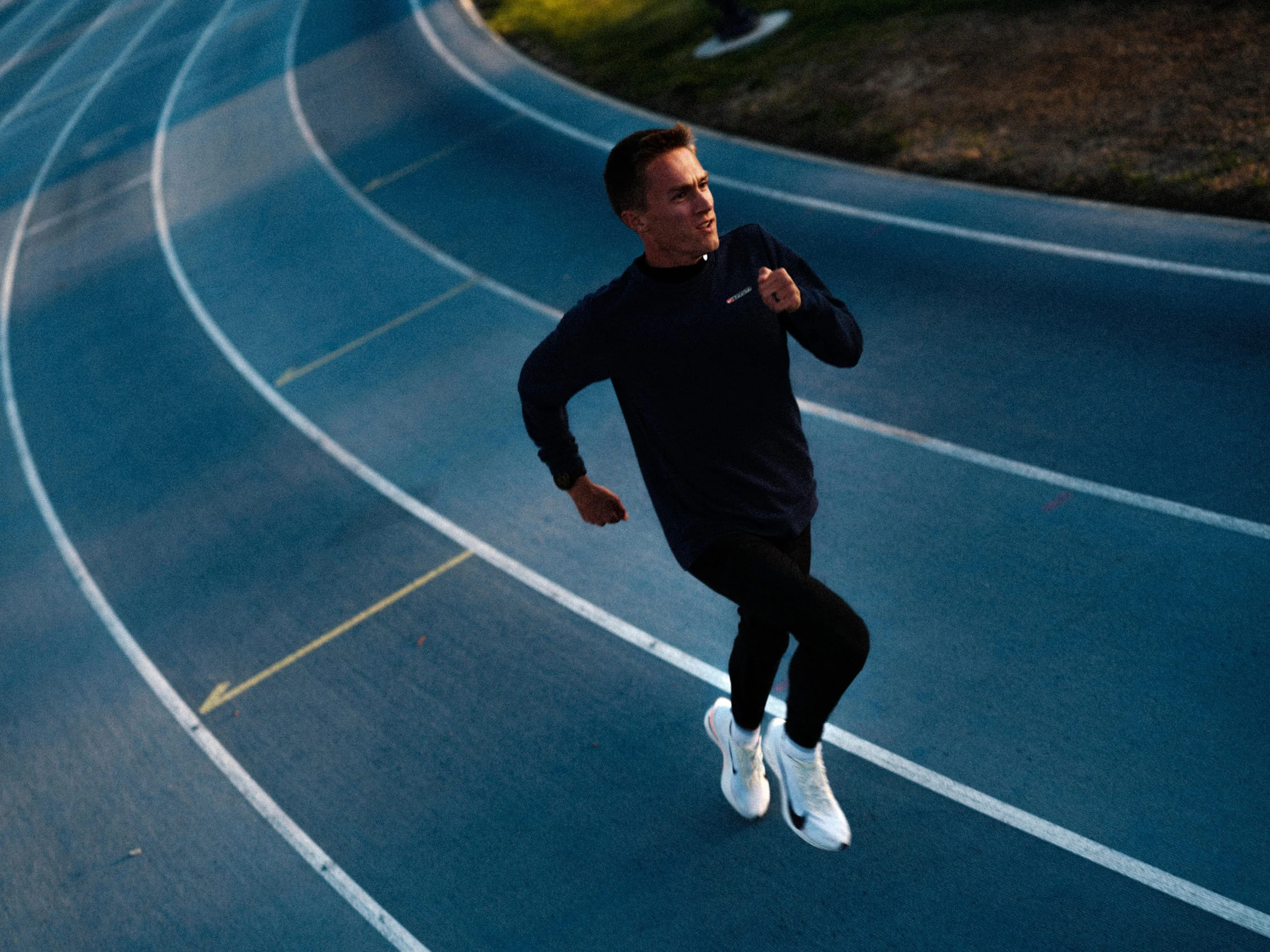
Watching from the sidelines was hard. When I called after Boston, Mantz said the cool, clear race-day weather made him feel he was missing out. He even missed being nervous. But he slept well that night—unlike the baby born to him and Kylie in July, who, he joked, could use more sleep.
For now, Mantz’s year has tested the idea that consistency means racing every time. He missed Boston, but the routines behind his running remain: Saturday miles with friends, Sundays with family, recovery after hard sessions, and the ordinary repetition of eating, sleeping, and doing it again. The discipline is less glamorous than a record. It’s also the part he can return to.
Conner Mantz’s life runs on a tight schedule. Sundays are for church; a school talk or sponsor dinner at Magleby’s may occasionally break the pattern. The rest of the time, his days move with the regularity of a bus route.
That discipline reaches beyond training. His TV stays dark and his walls bare; there’s little room for The Pitt, a visit to Springville Museum of Art, or an afternoon scrolling through paintings. Running, religion, and now a child occupy his attention. As Eliud Kipchoge put it: “Only the disciplined ones in life are free.”
Does that make discipline dull? Distance running has always looked that way from the outside, and I recognized the truth of it in my own routine: get up at 7 a.m., brush my teeth, pull on black leggings, lace up my Sauconys, and run six, nine, or 13.1 miles. I’ve done it every morning for decades. Running asks for repetition. The best runners simply accept more of it—and stick with it more completely.
Here’s the thing: boring can be a competitive advantage. It’s part of how runners break records and reach podiums, how Conner came to embody the phrase “be the Mantz.” Routine can offer meaning and calm, whether or not you share his Mormon faith. And if Mantz keeps building his days around it, that same steadiness could carry him toward Olympic gold in 2028.
When I called in early May, he was home from a babymoon in Hawaii and had family visiting. The crack in the drywall had been repaired. His body, though, still hadn’t fully healed—a point he was reluctant to concede.
The recent London Marathon had left him thinking about what might be possible. He was looking ahead to the Copenhagen Half Marathon in September. “If Sabastian Sawe and Yomif Kejelcha can break two hours, it makes me think, ‘What can I do?’” he said. “With the right race, on the right day… If I dot my i’s and cross my t’s, how good can I be?”
Then he paused, apologized, and said he had to run. There was a crib to assemble, too—and other exciting things waiting at home.
 Rachel Levin is a San Francisco-based journalist and author of LOOK BIG: And Other Tips for Surviving Animal Encounters of All Kinds. She has written for the New York Times, the Wall Street Journal, Outside, the New Yorker, and Eater, where she was the San Francisco restaurant critic. An occasional columnist for the San Francisco Chronicle, she is co-author of EAT SOMETHING: A Wise Sons Cookbook for Jews Who Like Food and Food Lovers Who Like Jews, named one of Eater’s Best New Cookbooks of 2020.