Editor’s note: At its annual RW Shoe Summit in New York City, held the week before the NYC Marathon, Adidas acknowledged that exposed forefoot foam on the Adizero Adios Pro Evo 3 wore through early for a small number of runners. The company says it will extend the outsole to shield that foam across the shoe.
From record-setting prototype to a wider release
Sabastian Sawe made marathon history as the first runner to break two hours in an official race, wearing Adidas’s Adizero Adios Pro Evo 3. At $500, the ultralight racer is built for speed—and difficult to buy. Its performance has drawn attention, but the durability issue Adidas disclosed is a reminder that shaving weight can leave less material protecting a shoe’s most exposed parts.
Now Adidas has introduced the Adizero Adios Pro 5, a $275 racer that brings some of the Evo 3’s lessons to the next version of the brand’s flagship racing shoe. It’s lighter than its predecessor and replaces carbon rods with a new carbon rim arrangement. Whether those changes translate into a meaningful advantage over the previous model is something the specs alone can’t answer.
We tested the Adios Pro 5 before its announcement, taking it through several fast workouts. Here’s how it felt at pace.
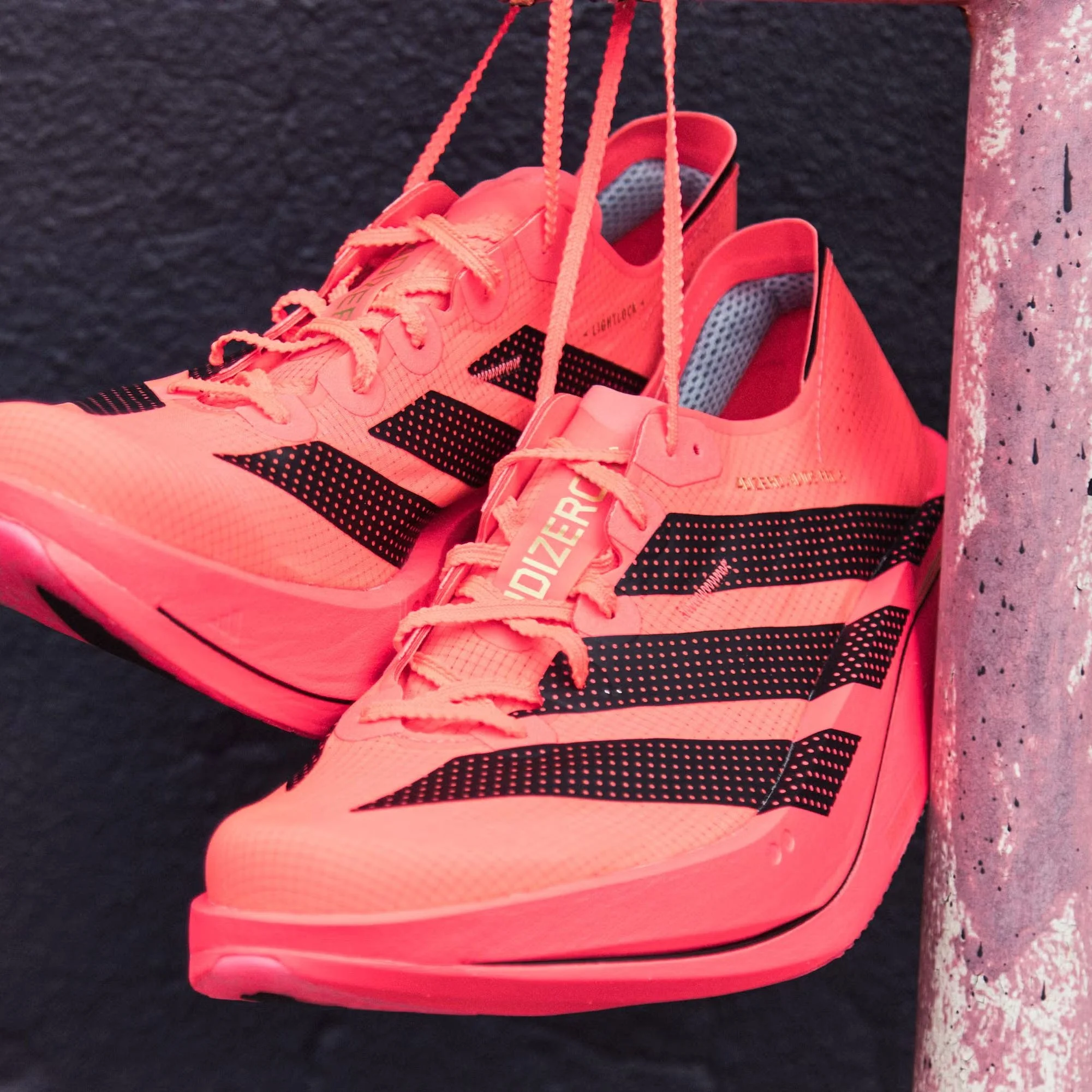
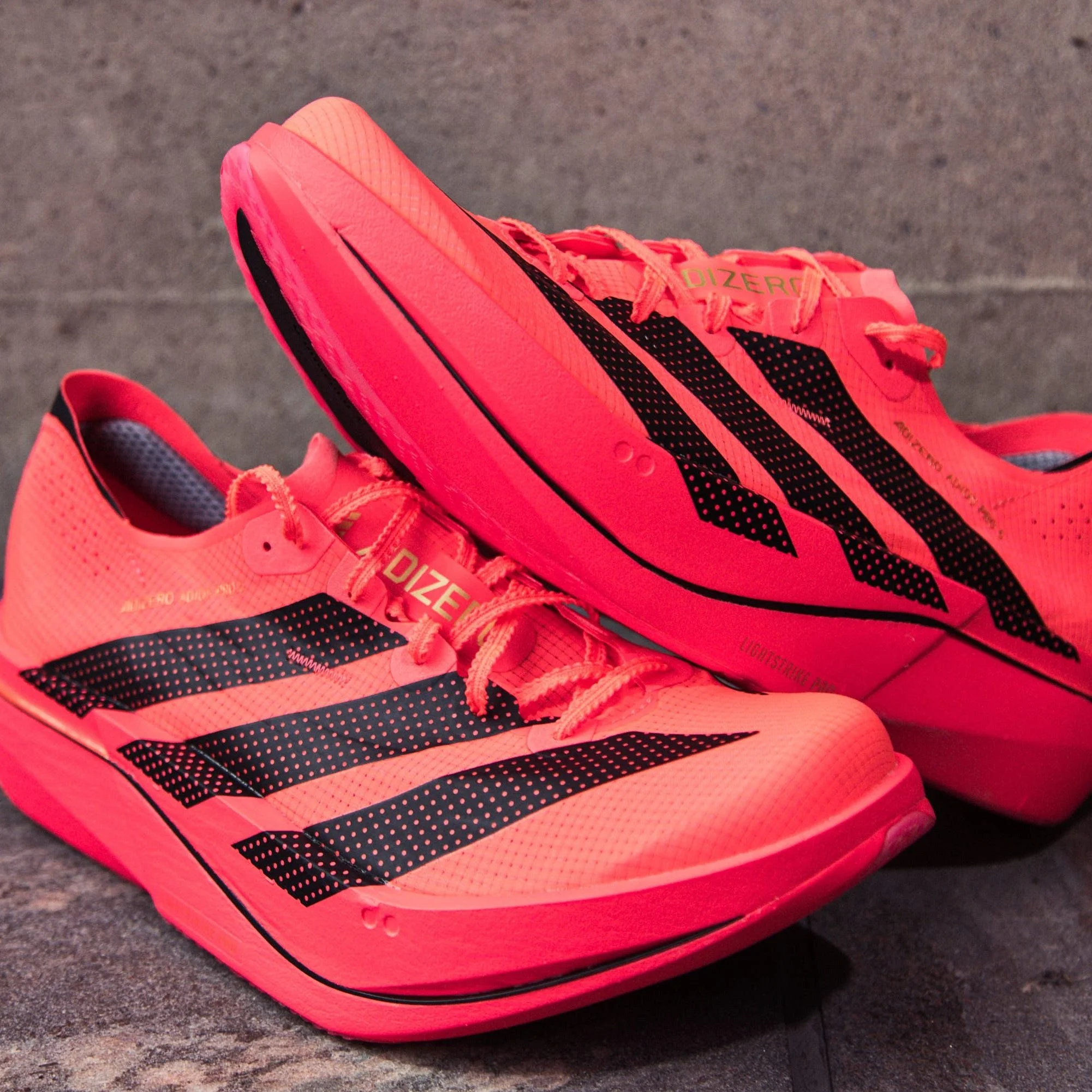
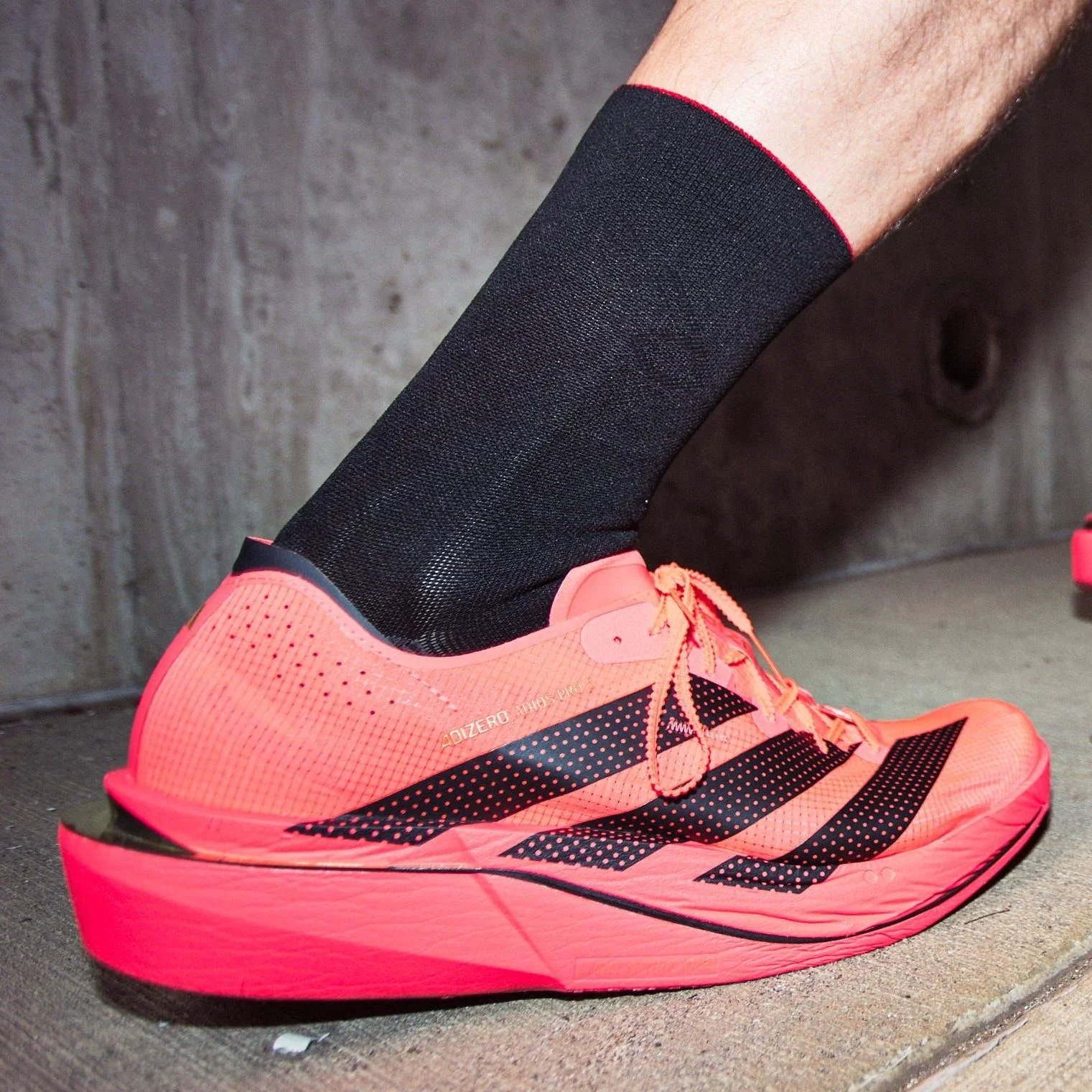
The Adizero Adios Pro 5 is a restrained update to a shoe that was already working. Adidas’ race shoe weighs 6.1 ounces in a men’s size 9 and 5.3 ounces in a women’s 7, with a 4 mm drop and a 39 mm heel stack.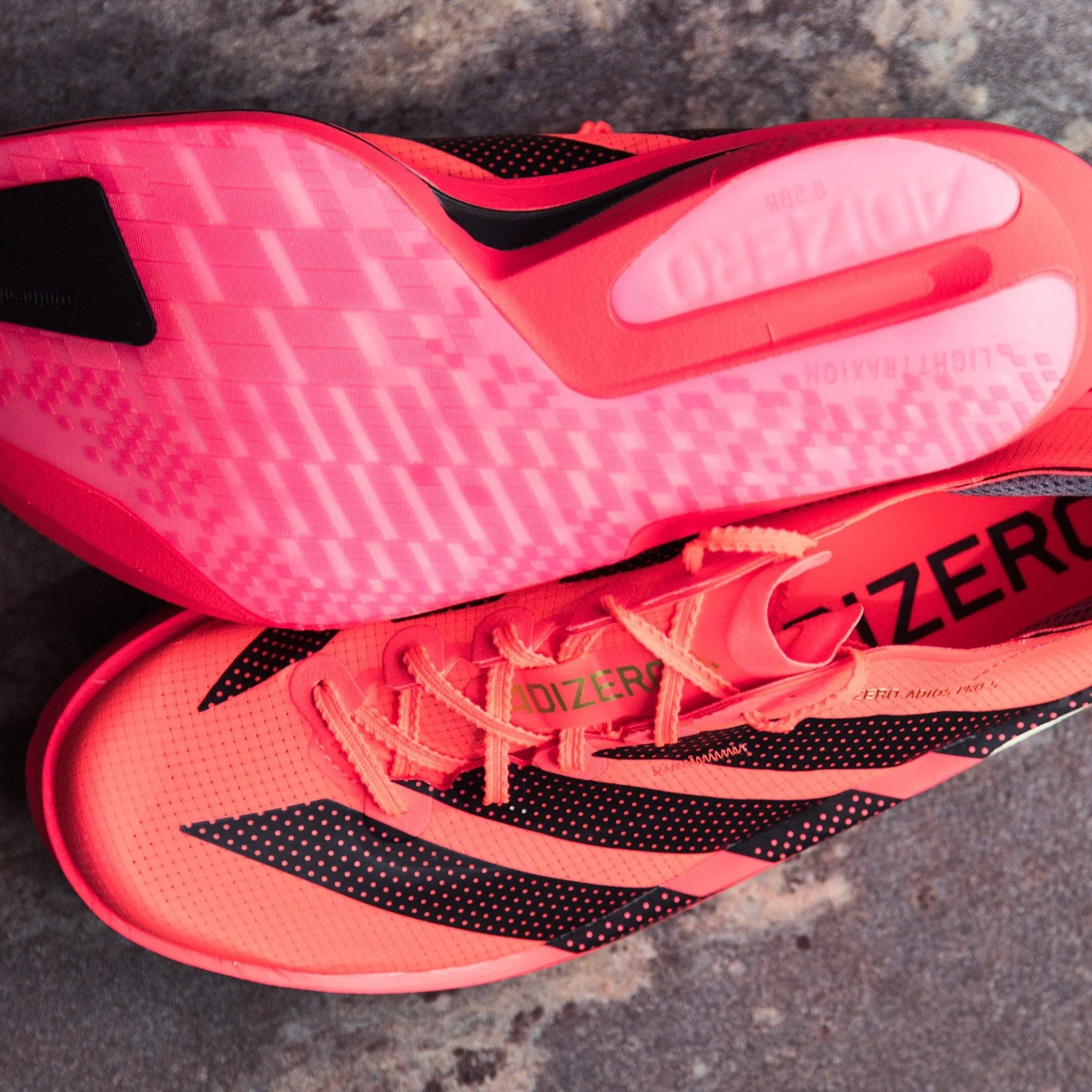
Small changes, meaningful trade-offs
The carbon rim feels stable and quick, while the midsole is firmer than before but still soft enough for a race shoe. Adidas also adjusted the upper in ways that could help runners who found the Pro 4 too small. That’s a useful change, though the arch remains narrow and may rub or blister runners with wider feet. The $275 price puts the Pro 5 squarely in premium racer territory. If you’re weighing the upgrade, the fit changes may matter more than a headline-grabbing redesign. And yet, that’s often the sensible move when the previous version was already strong: refine the ride without disturbing what worked. That pattern showed up in Nike’s [Alphafly 4](https://www.runnersworld.com/gear/a73761888/nike-alphafly-4-launch-review/) as well. Some online commenters dismissed it as an “Alphafly 3.1,” but modest adjustments improved the formula. The Adios Pro 5 follows a similar logic.Race-shoe weight, with room for long miles
The most meaningful change in the Adios Pro 5 may be the one you notice least while running: it weighs less. My size 12 pair comes in at 7.3 ounces, an ounce lighter than the Pro 4, which had already shed an ounce from its predecessor. That puts it alongside the Puma Fast-R 3, Asics MetaSpeed Sky/Edge, and Nike Vaporfly 4. It still has enough substance for long-run comfort and durability. The weight savings haven’t come at the cost of a shoe that feels stripped down.
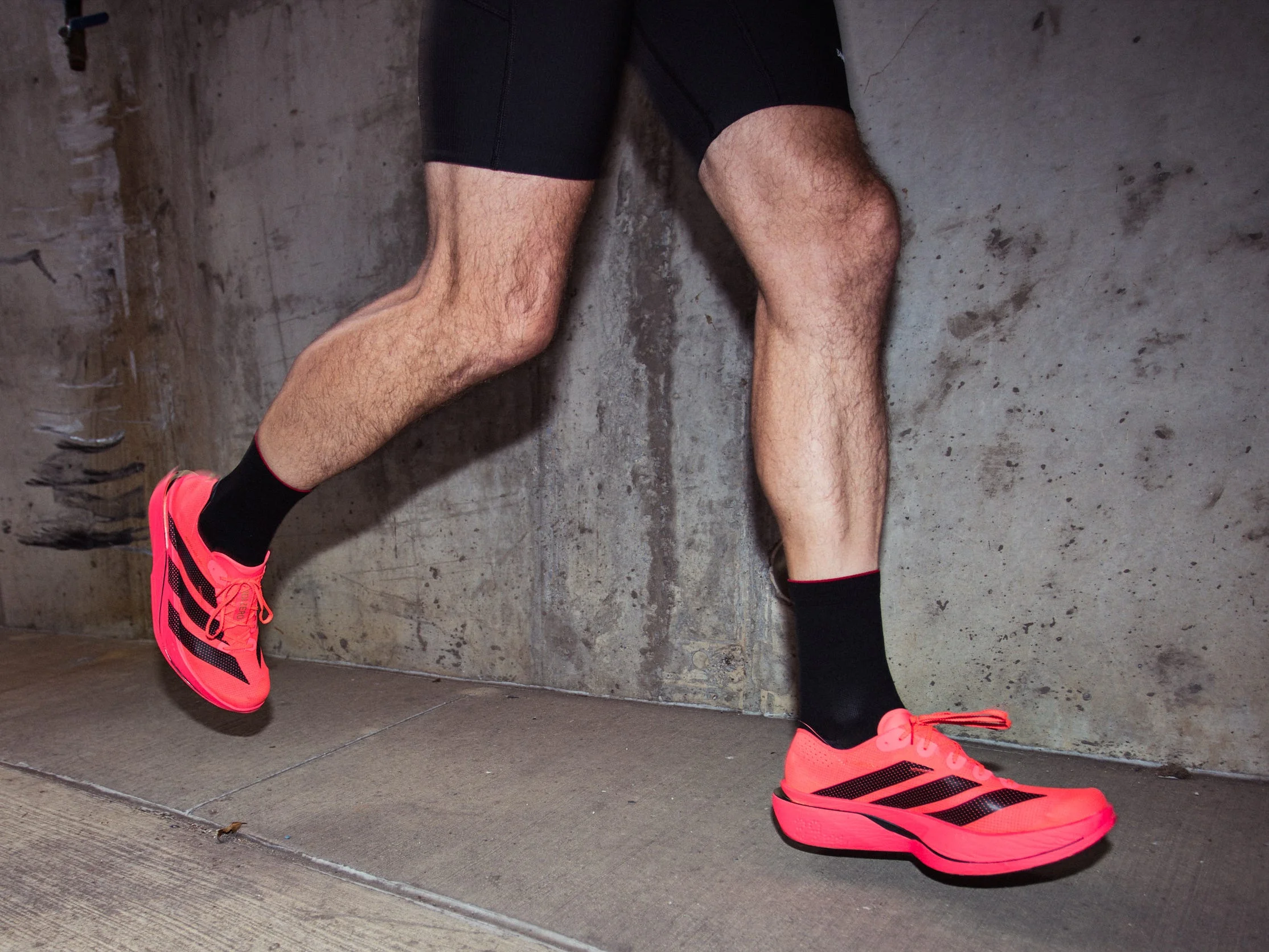
Lightstrike Pro feels a touch firmer once the pace picks up, giving the shoe a little more bite than the previous version without losing its broad range. The Pro 4 was comfortable at an easy 20 miles and capable of carrying me through a sub-three-hour marathon. The new shoe feels cut from the same cloth, with a slightly livelier response.
I got that impression immediately. A nine-mile easy run straight from the box felt as cushioned as a daily trainer; the next day, I ran five one-mile repeats at 5:45 pace with quarter-mile recoveries while a friend hammered out six 2Ks. I got dropped, but the shoe wasn’t the limiting factor. I could feel the foam compress under landing, then rebound at toe-off. It had more speed in reserve than my legs did.

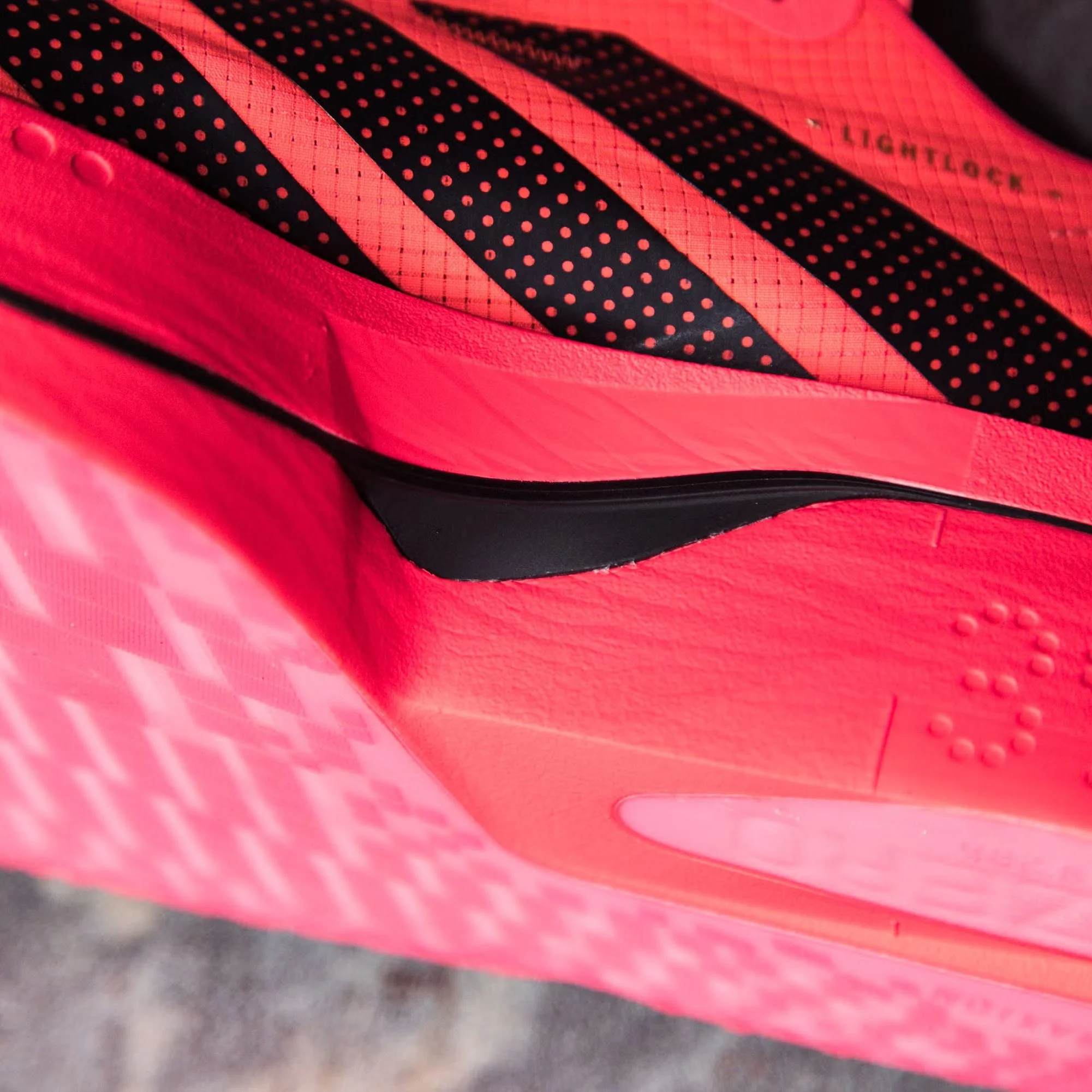
Adidas has also filled in the cutout beneath the arch and rear half of the midsole. On the Pro 4, that opening exposed the carbon rods and could leave the shoe feeling a little wobbly at mid-stance. Now more foam meets the ground, and the added contact makes the ride feel more settled through the stride.
Carbon rods give way to a rim
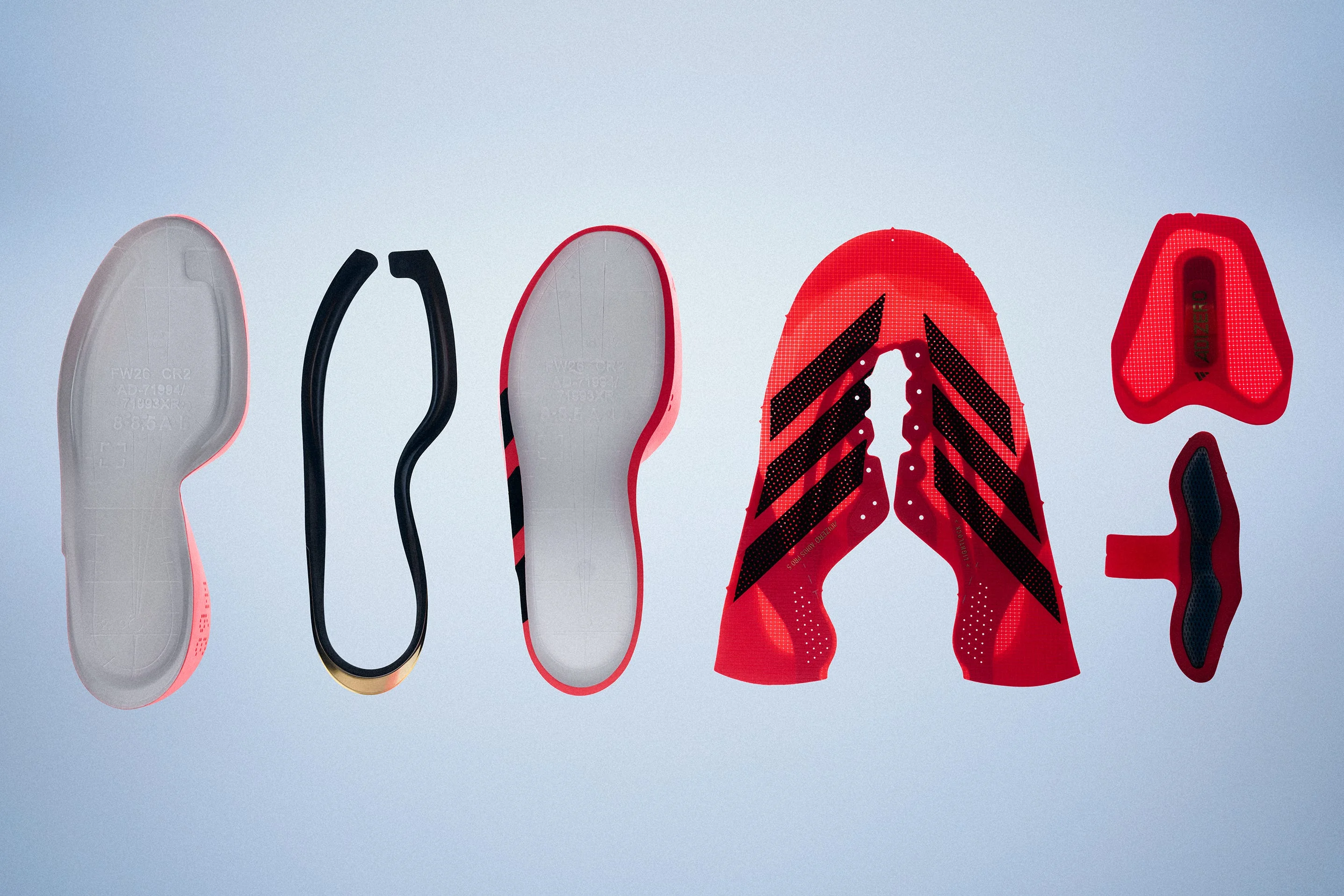
The rods are gone. In their place, Adidas has borrowed an idea from its $500 racer: a carbon structure that runs around the shoe’s perimeter. The rim stiffens the edges, helping contain the soft foam while leaving the foam itself directly underfoot for each landing and push-off. It’s thicker along the arch, where it also helps steady the shoe.
Adidas says the lighter construction, foam and carbon rim together deliver 9 percent more energy return than the Adios Pro 4. The company also reports a 12.5 percent weight reduction. Those are manufacturer figures, so they describe Adidas’s comparison; they don’t tell us exactly how every runner will experience the change.
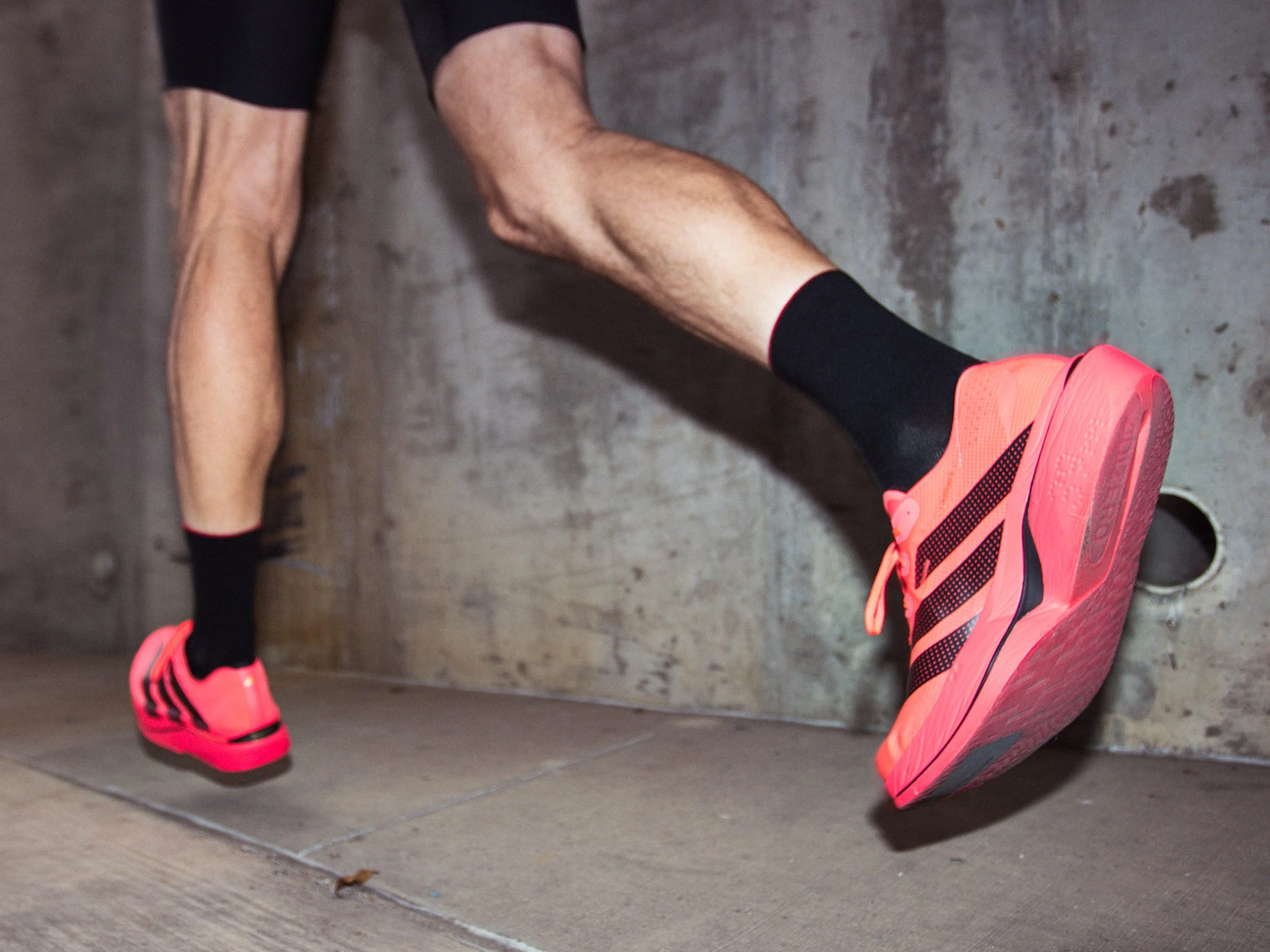
There’s one small but painful drawback: that rim reaches the medial edge, and kicking your own ankle with it hurts. Better form and strengthening drills might prevent it; for now, I’m left wincing when I catch myself.
The fit still favors narrow feet
The basic shape hasn’t changed much. The fit remains snug and race-oriented, though the Pro 5 seems a little longer than the Pro 4. In my usual size, the older shoe left my toes dangerously close to the front; after a hard 23-mile run that ended with a six-minute mile, I earned my second black toenail in 40 years of running. The Pro 5 feels truer to size, with a bit of breathing room at the toe, but it’s still far from spacious.
News editor Theo Kahler also liked the Pro 4 and wore it when he placed 40th at last year’s NYC Marathon. After a 20-mile Pro 5 run with four two-mile pickups at 5:10 pace, he found it comfortable at speed and said his legs had “more pop toward the later miles than I would have expected.” But he had to switch to the Nike Vomero for the final four easy miles after a hot spot developed on his arch. His explanation: “The hard part of the workout was over, anyway.”
That’s the caveat runners should take seriously. The waist of the shoe remains exceptionally narrow, and the arch can rub; if your foot is broad or your arch isn’t high, there’s a real chance this fit will bite. For runners it suits, the Pro 5 brings a rare mix of cushioning, pace and stability. But the shape remains a constraint, and the extra speed won’t matter much if the arch starts hurting halfway through a long run.