Stability without the brick
Campbell's brief for the Structure Plus was blunt. The team wanted a super trainer that was "more supportive, smoother, softer, and more palatable." The hardware clearly targets the first three. The fourth is where things get interesting. Start with the platform. Nike widened it for support, and the sidewall has a convex, flat profile that keeps the foot from rolling off the edge. Under the arch sits a dense foam piece that acts as a stabilizer and helps hold alignment. On top, a dual foam layer borrowed from the Vomero Plus delivers the soft, energetic ride. On paper, that's a lot of engineering aimed at one job.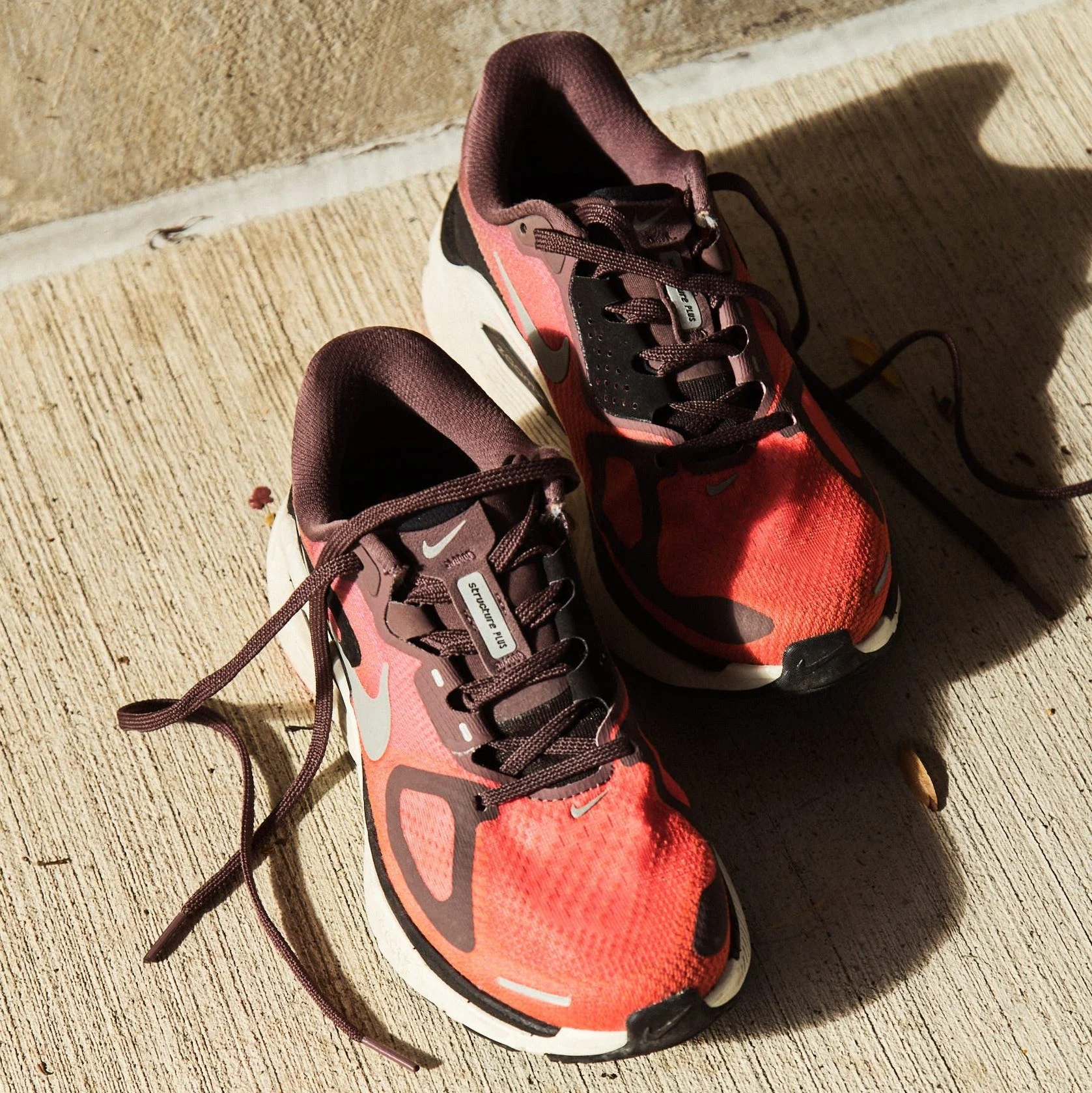
Tall on paper, lighter on the scale
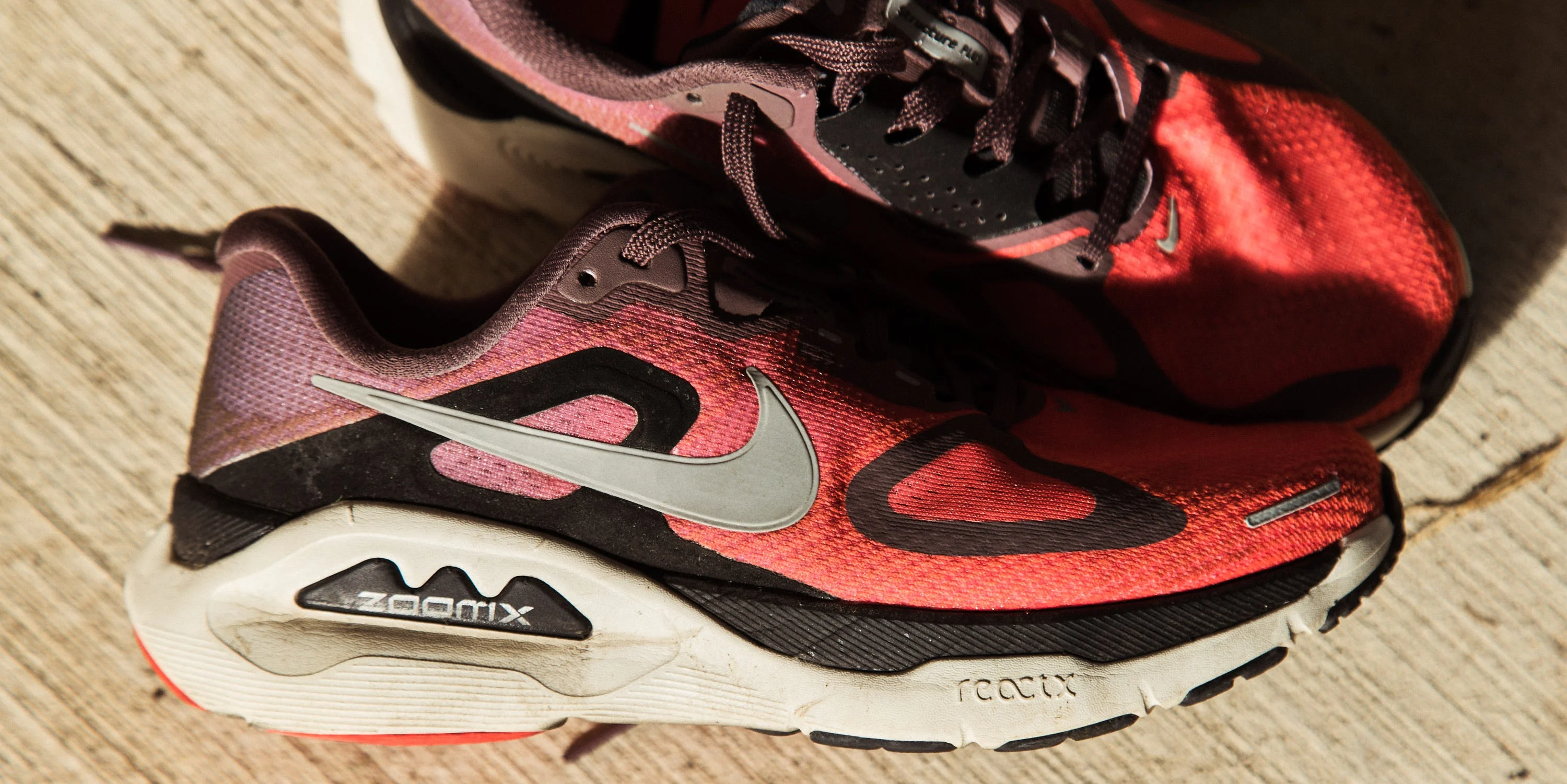
The numbers invite skepticism. The heel stands 42 mm high and the forefoot 32 mm, a 10 mm drop. Stack that much foam under you and you'd expect a clumsy, heavy ride. The Structure Plus pushes back on that assumption. A men's size 10 weighs 10.9 ounces, which undercuts the 11.3 ounces of the Structure 26. That's a real difference, even if it isn't dramatic. The cushioning is split between two foams, and they do different jobs. The maximal layer is PEBA-based ZoomX, a soft foam with high rebound. It's the same material in Nike's premium marathon shoe, the Alphafly, which tells you where Nike thinks the bounce belongs. Beneath it sits TPE-based ReactX, a firmer foam meant to steady the ride. It's also the foam in the Vomero 18. That pairing is the real argument here. Soft foam for energy return, firm foam to keep you from wobbling. Whether the combination feels balanced depends heavily on your stride, and the product notes already concede the trade-off. One reviewer's pro is another's con: the platform is broad enough for wide feet, but the shoe felt heavy to some testers.What it costs and who should look twice
Nike lists the Structure Plus at $170, and Amazon sells it for $169.99. Neither price is the deciding factor. The question is whether a stability super trainer with a wide base and a bouncy top layer fits how you run. If you've been reaching for a traditional stability shoe because you assumed you needed one, the Structure Plus is worth a serious look. If the weight bothers you on a standard training day, try it on before you commit to the long runs.Stability That Doesn't Feel Like Stability
The Structure Plus carries a lot of foam and a lot of support, yet it never feels heavy. It doesn't roll my foot inward, and it doesn't force me into a position I didn't choose. It guides my stride without taking over. That's a rare combination in a stability shoe, and it's the reason I'd recommend a second look even if you've written off this category.
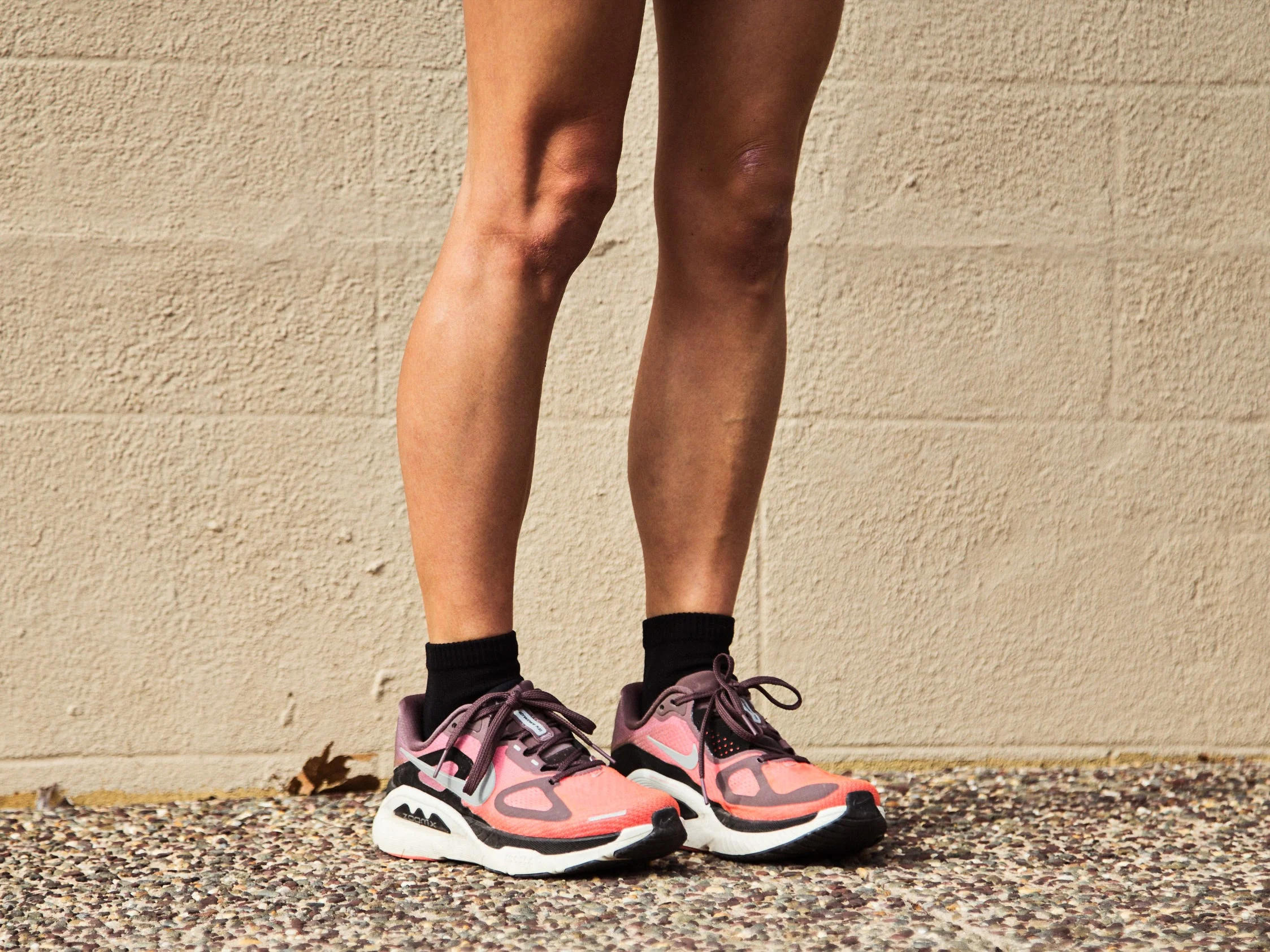
Photo credit: Winston Zhou. The shoes have a broad platform, which helps with stability and makes the fit inclusive for runners with wide feet.
The contrast with the Vomero Plus made this obvious. The weekend before, I ran in the Vomero Plus and tripped over myself so many times that my friends started asking if I was okay. My next long run in the Structure Plus was smooth. The difference wasn't subtle, and I didn't have to think about my footwork once I laced these up.
Overpronators Weren't Disappointed
I'm a neutral runner, so I can only speak to my own experience so far. My form falls apart in the later miles, the way it does for most people when fatigue sets in. That's where the Structure Plus earns its keep. It keeps me upright when I'd otherwise be sliding into a bad stride, and it's the difference between finishing a long run and being sidelined with an injury.
The real test came from testers who overpronate, and they were largely satisfied. Julian Caiazzo, who overpronates, put it this way: "What I liked most about the Nike Structure Plus was the strong sense of support it delivered on every run. The shoe felt stable and dependable without ever coming across as stiff or restrictive. It gave me the confidence to settle into my stride, and even with all that structure, the ride still felt smooth and enjoyable."
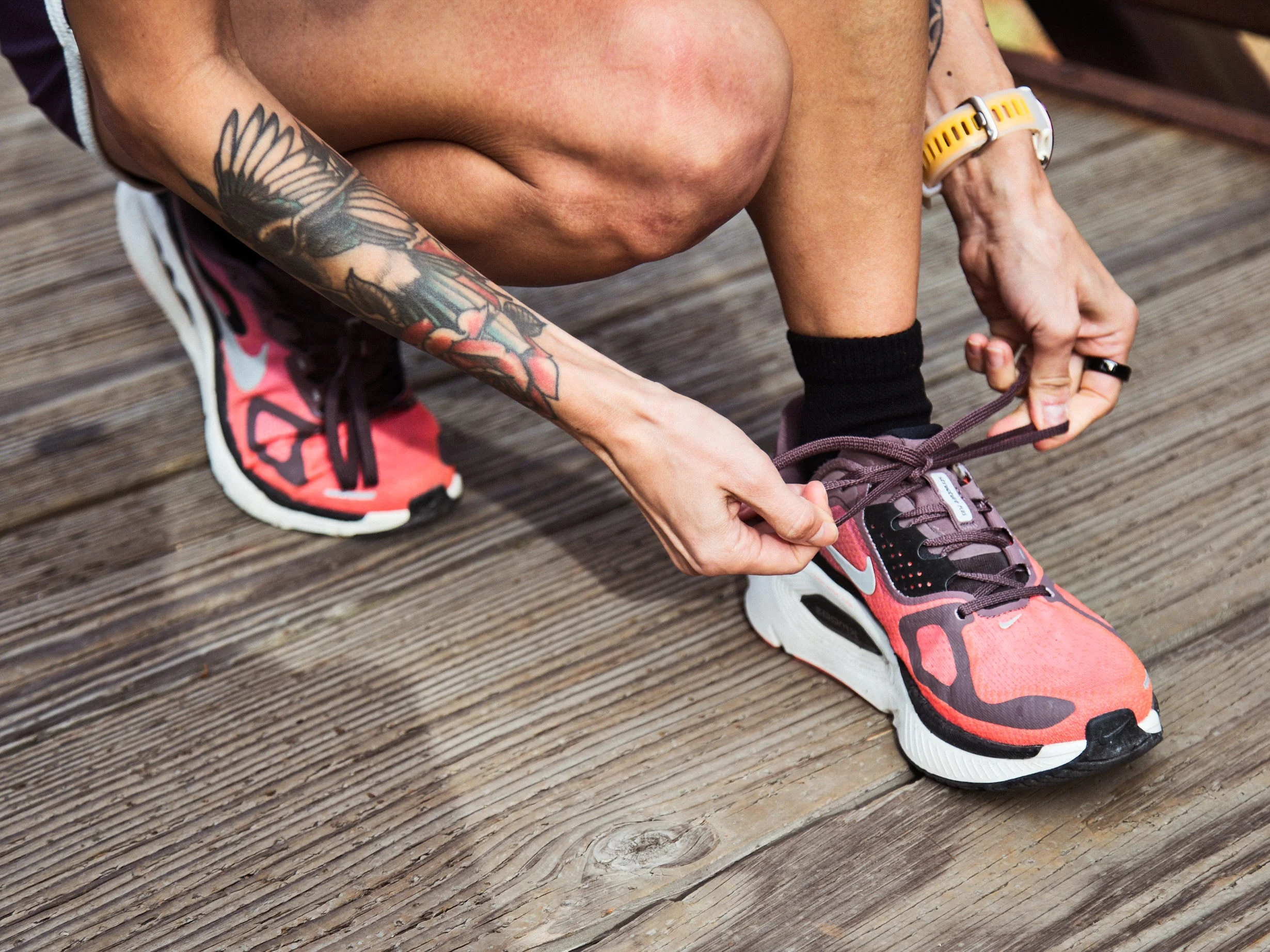
Photo credit: Winston Zhou. The Structure Plus is the super trainer version of the Structure 26.
Katherine Thomas, another overpronator, was more blunt. She admitted she usually steers clear of Nike because of how little stability its shoes offer. The Structure Plus changed her mind. For a brand that has often been overlooked in the stability category, that kind of reversal from a skeptical tester is worth more than any spec sheet.
Nike Gets a Second Look
If the Structure Plus changes anything, it's your assumptions about stability shoes. It also changes what you think of Nike's running line. I avoided Nike for years, mostly because its stability models felt narrow through the midfoot and pinched at the toes. The Structure Plus doesn't have that problem. There's no squeezing along the sides of my midfoot and no pressure at the toe box.
And yet it still feels like a Nike shoe in the best way. A layer of ZoomX adds the bounce that makes Nike's trainers fun to run in. That's the part that surprised me. Stability usually comes with a trade-off in energy return, and this one doesn't make you pay for it. Long runs stop feeling like slogs. Nike set out to make stability more exciting, and on my runs, it did.
If you're shopping for a stability shoe that doesn't feel like one, the Structure Plus deserves a spot on your shortlist. It's available for both men and women: