When the quadratus lumborum, or QL, starts hurting, the problem may reach beyond one sore muscle. This deep trunk muscle helps steady your pelvis and torso while you run, and irritation can affect both your stride and your breathing. The numbers aren’t available here, but the mechanics explain why runners shouldn’t dismiss pain around the lower back or pelvis.
The QL attaches to the lower spine and the back of the pelvis. It also helps you arch your back, bend sideways, and rotate your upper body, says Nicole Haas, PT, DPT, a physical therapist and founder of Boulder Physiolab in Colorado. During a run, it takes on more of a stabilizing job: Spencer Agnew, PT, DPT, a physical therapist at Sword Health and run coach with Wisconsin-based Ascent Endurance Group, says the muscle controls movement through the pelvis and trunk. It also assists with inhalation.
That combination makes the QL an easy muscle to overlook until other parts of the body stop doing their share. Tight or irritated tissue can cause pain in the back or in the sacroiliac joints, where the pelvis meets the lower spine. Here’s the thing: a painful QL isn’t necessarily a tight QL. Haas says it can simply be overworked as the body compensates for movement problems elsewhere.
What can irritate the QL?
Tight hip flexors are one possible trigger. When the psoas, a large hip flexor running from the lower back to the front of the hip, shortens, it can tip the pelvis forward and increase the arch in the lower back. Because the psoas and QL attach to the same group of lower-back vertebrae, that shift can tug on the QL, Agnew explains. Runners dealing with tight hip flexors may therefore be adding strain to the muscle without realizing it.
Weak glutes can set off a different chain of compensation. If the glutes can’t help maintain sound running mechanics, a knee may roll inward on landing while the opposite hip drops. The trunk can then bend and rotate to compensate, putting repeated load on the QL. Downhill running may make matters worse by encouraging a greater arch in the lower back, Haas says.
Stiffness higher up the spine can also shift work onto the QL. Haas points to limited movement in the upper back, as well as pain or injury affecting the shoulders, hips, or mid-back. When those areas don’t move freely, the QL may pick up extra work. As Haas puts it, it can be “overworked and underappreciated”—a useful reminder that the sore spot isn’t always the source of the problem.
How QL pain can affect your run
A QL that feels tight may interfere with how you move. If it contributes to shortened hip flexors and a forward-tilted pelvis, you may lift your knee less as you stride. Agnew says that can limit forward force and leave you running with a more arched back. The result can be slower or less efficient running alongside greater risk of back pain.
Breathing may change, too. Since the QL helps with inhalation, Agnew says tightness can make it harder to breathe deeply or comfortably. That’s a broader effect than many runners expect from a muscle they may never have heard of.
A three-step routine for relief
If you suspect an irritated QL, Agnew recommends a home routine that starts with soft-tissue work and moves into pelvic control and strengthening. When discomfort is significant enough to limit running, the sequence can be done daily. For milder pain, try it two or three times a week. On running days, do the release, pelvic tilts, and hip hikes before heading out; complete the rest afterward.
Step 1: Myofascial release
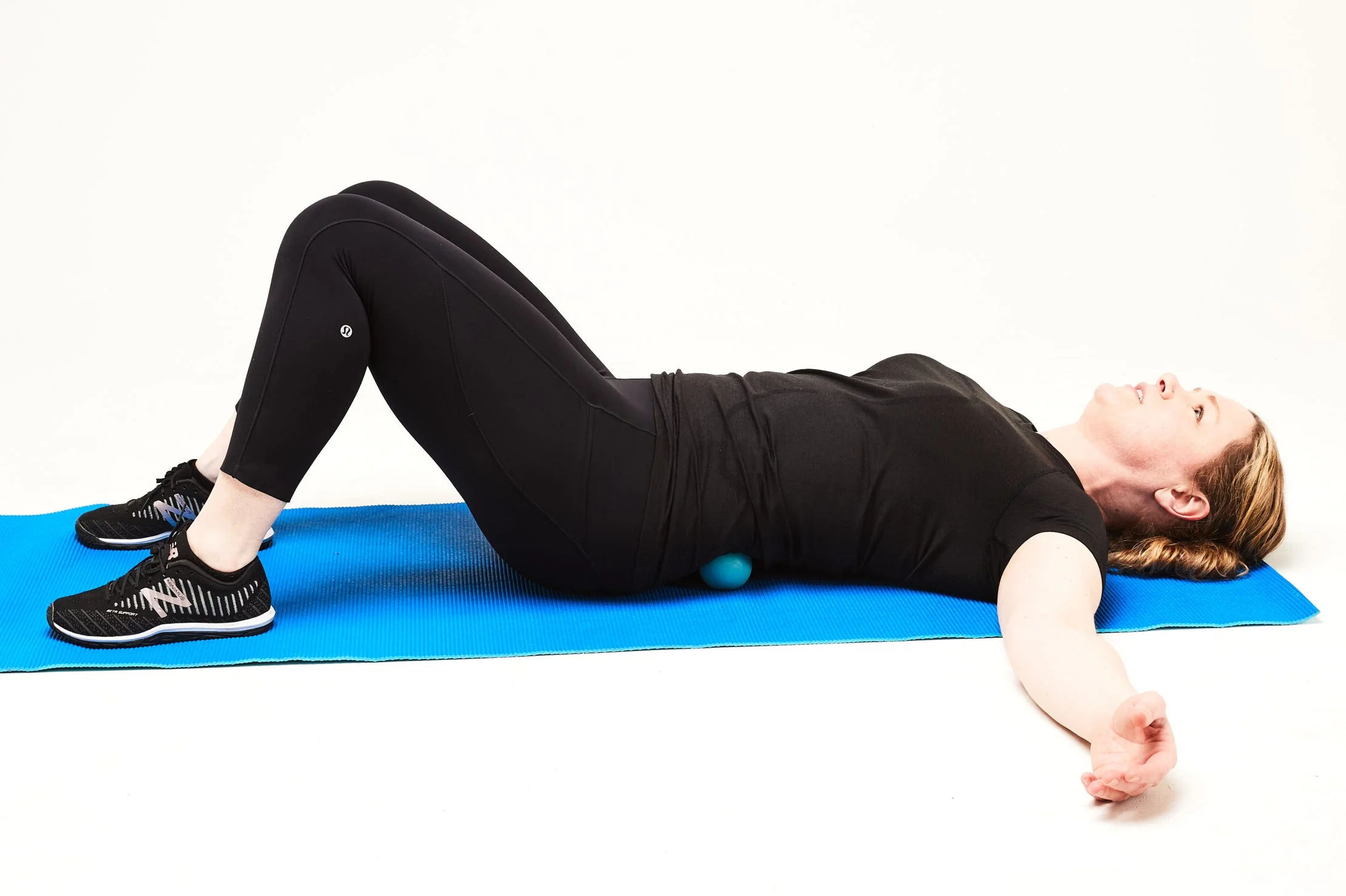
Pressure from a ball may help calm the pain response by making sensitive soft tissue less reactive, Agnew says. Lie on your back or stand near a wall, then place a softball, lacrosse ball, or trigger-point ball against a tight-feeling area of the lower back. Hold gentle pressure for about 30 seconds while taking deep belly breaths. Move the ball to another spot and repeat across the areas that feel tight, for two to five minutes in total—or as long as you have. Some discomfort is acceptable; if you can’t hold the pressure for 30 seconds, ease off by putting less body weight into the ball.
Step 2: Pelvic and QL exercises
These movements have different jobs. Pelvic tilts build control over pelvic position, which can help you keep steadier mechanics while running. Hip hikes activate the QL. A kettlebell side bend increases blood flow to the muscle, which may support healing, while a suitcase carry builds strength and stability so the QL can do its job during a run.
Pelvic tilt
Lie on your back with your knees bent and feet flat. Slowly alternate between arching your lower back and pressing it into the mat, repeating 30 times. Then find the midpoint between those positions: a neutral pelvis. Use that position for the remaining exercises and aim to maintain it while running.

Build strength around the QL
The useful idea behind these exercises is simple: train the trunk to resist tipping and twisting, rather than asking the quadratus lumborum (QL) to do all the work. Keep the movement controlled and the pelvis steady. **Hip hike:** Stand with your left foot on a step and your right leg hanging off the edge. Keep the left knee straight as you lower the right side of your pelvis, then bring it back level. Do 12 to 15 repetitions, switch sides, and complete two sets. *Photo: Trevor Raab*
**Kettlebell side bend:** Hold a heavy kettlebell in your right hand and bend your torso to the left. Pull yourself upright without rotating or leaning backward; the motion should stay in the side bend. Do 12 to 15 repetitions, change hands, and complete two sets. A dumbbell, another free weight, or a heavy household object can stand in for the kettlebell. If you can’t reach 12 reps with good control, use less weight.
 *Photo: Trevor Raab*
**Suitcase march:** Hold a heavy kettlebell at your right side and march slowly, lifting each thigh until it’s parallel to the floor. Keep your pelvis stable as you alternate legs. Do 12 steps per side for two sets. Walk forward if there’s room; otherwise, stay in place. A dumbbell, other free weight, or heavy household object works here too.
 *Photo: Trevor Raab*
Stretch the QL and hip flexors
A half-kneeling side bend targets both areas. Set up in a lunge with your right foot forward and left knee down, with both knees bent about 90 degrees. Reach your left arm overhead and bend to the right, keeping your pelvis neutral. You should feel a gentle stretch at the front of the left hip and along the left side of your trunk. Hold for 30 to 60 seconds, then switch sides. Repeat until you’ve accumulated about two minutes per side. *Photo: Trevor Raab*
More ways to stretch your QL
These movements can be done daily, or several times a day, before or after a run. But stretching isn’t a universal fix. If your QL hurts more afterward, or the pain quickly returns, stop: Haas says stretching may not be the right approach. **Child’s pose with a side stretch:** Start on hands and knees, with shoulders over wrists and knees under hips; bring your feet together. Keeping your back flat, sit your hips toward your heels until you feel a stretch. Reach your hands forward, rest your torso on your thighs, and pause for a breath. Walk both hands left to stretch the right lower back, holding 10 to 15 seconds; then move them right and hold for the same time.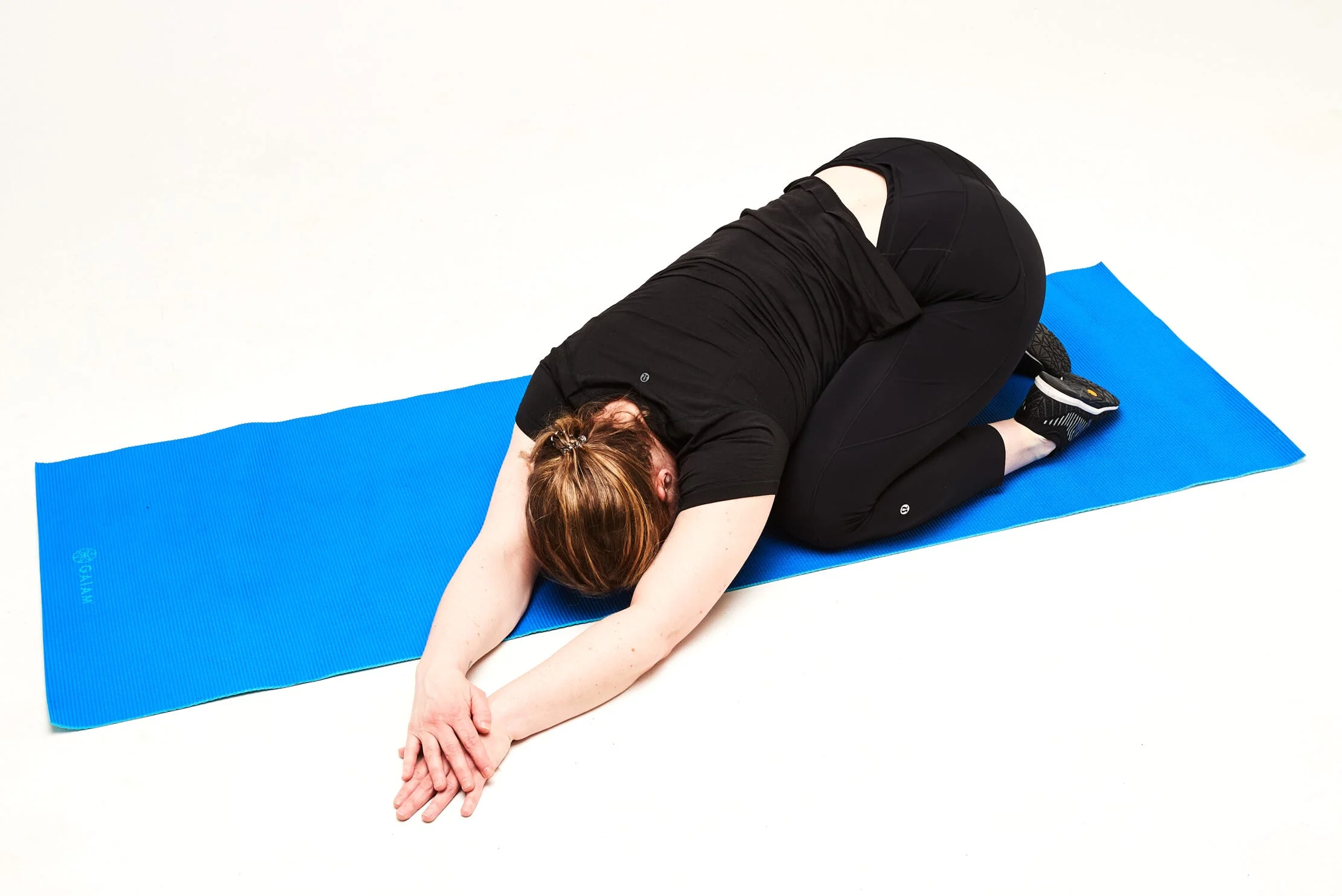 *Photo: Trevor Raab*
**Dynamic child’s pose:** From the same hands-and-knees position, send your hips toward your heels while keeping your back flat. Press your left hand into the floor and thread your right arm beneath your left armpit. Pause for several seconds, return to the start, and repeat until the right side feels looser. Switch arms to work the other side.
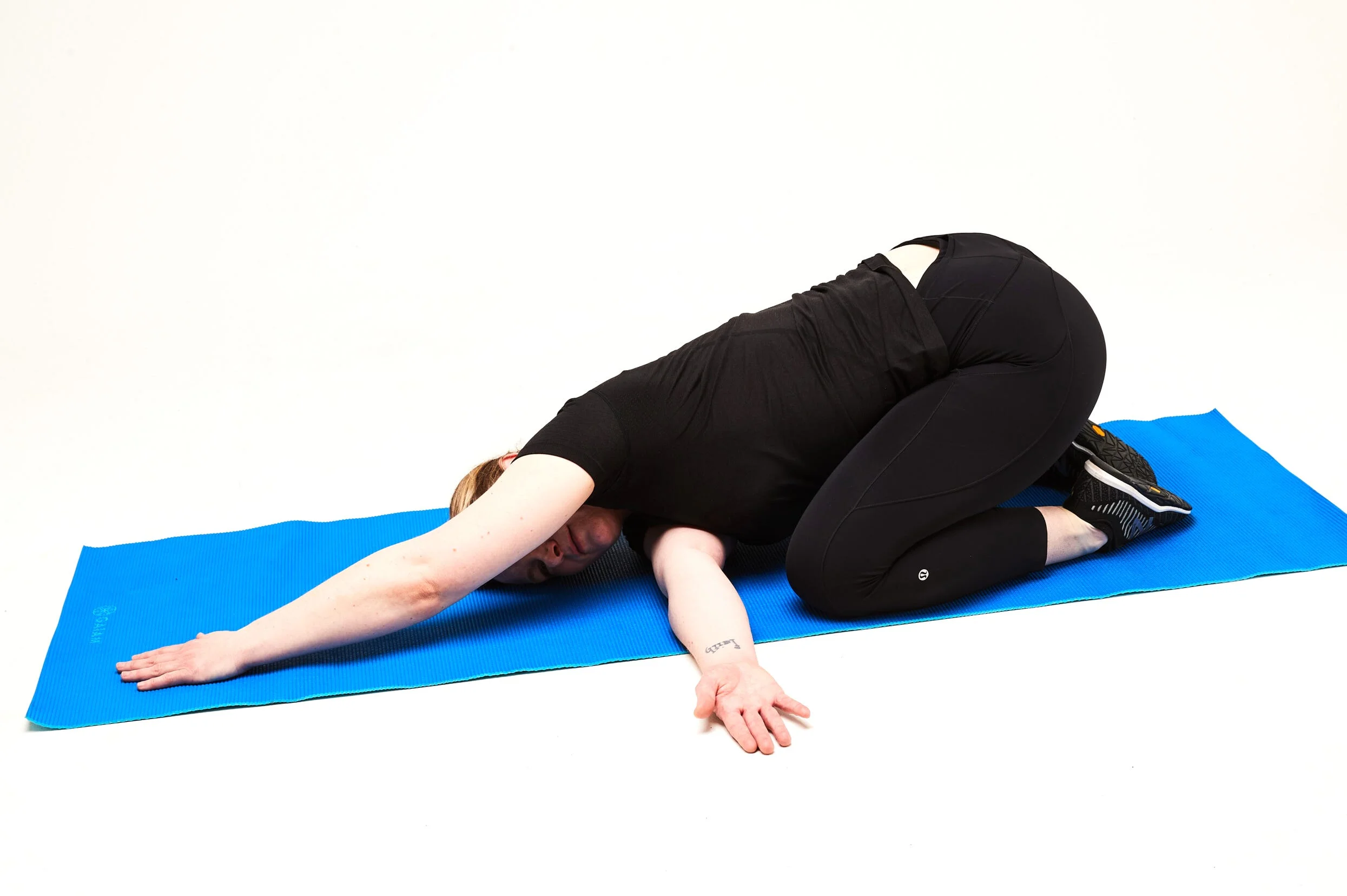 *Photo: Trevor Raab*
**Dynamic QL mobility with a 90/90 hip position:** Sit with knees bent and feet on the floor, then place your right shin in front of you and your left shin out to the side, both knees bent about 90 degrees. Put your right hand on the floor in front of your right knee and your left hand on your left hip. Press through the right hand as you thread your left arm beneath your right armpit. Hold briefly, return, and repeat until the left lower back loosens. Then switch sides.
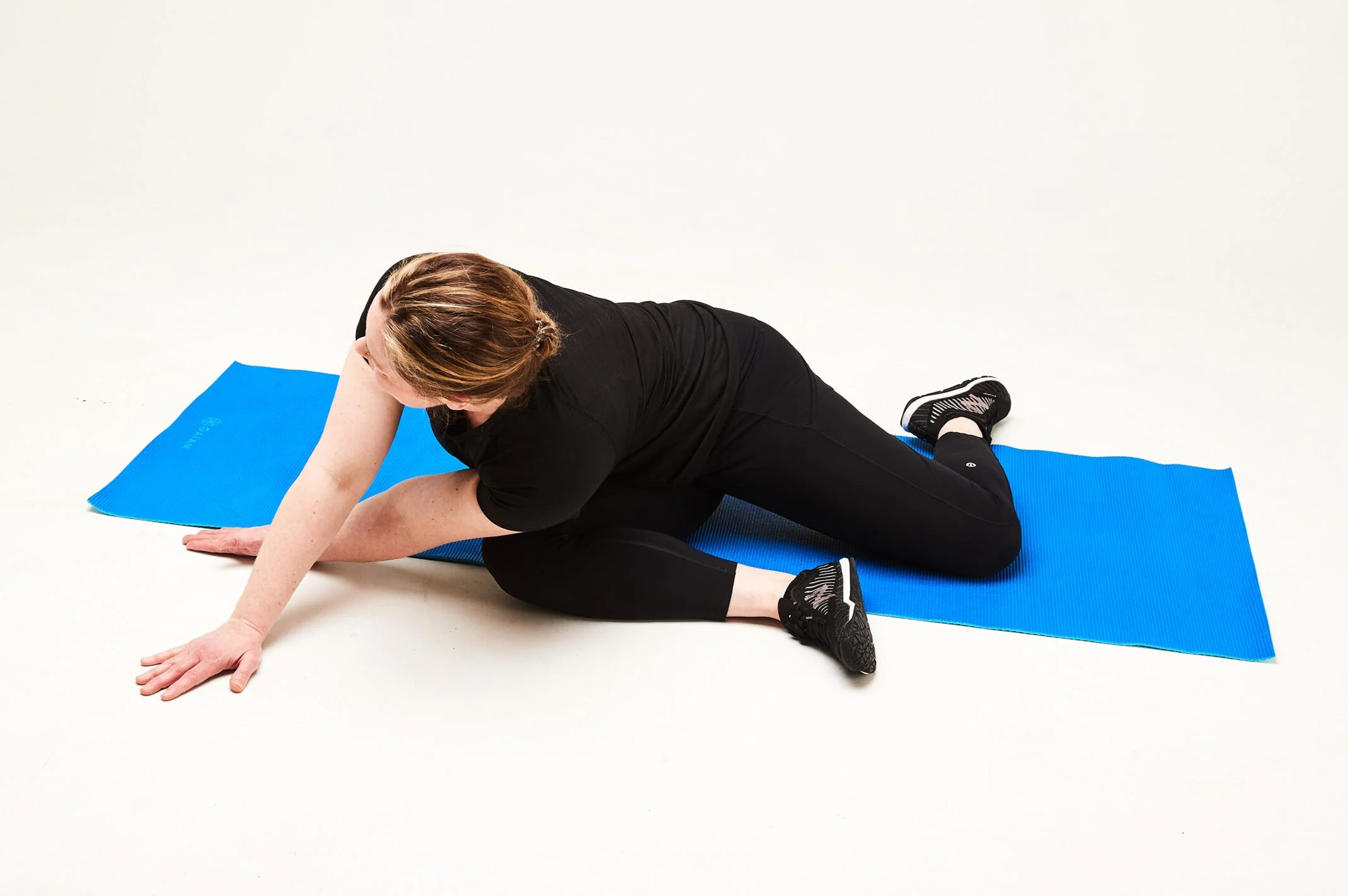
Build strength that carries into your stride
Start with one set of these exercises each day so your body can learn the movement patterns. If you’re sore, take a day off. After roughly six weeks, shift to two or three sessions a week and fold the exercises into your regular strength routine.Standing clamshell
The standing clamshell works the glutes while asking you to keep your pelvis steady—control that matters in running, too. Stronger glutes may reduce the extra load weak glutes place on the QL. **How to do it:** 1. Stand with your back toward a wall, then step a few paces forward. Balance on your left leg and bend your right knee, resting that foot against the wall behind you. Hinge forward slightly with a flat back. Hold a chair or another stable object with your right hand if you need help balancing. Keep your weight on the standing leg; don’t lean into the wall. 2. Turn the raised leg outward, opening the hip like a clamshell. Keep the standing knee from falling inward and your hips level. 3. Stop when your form starts to slip, aiming for at least six repetitions.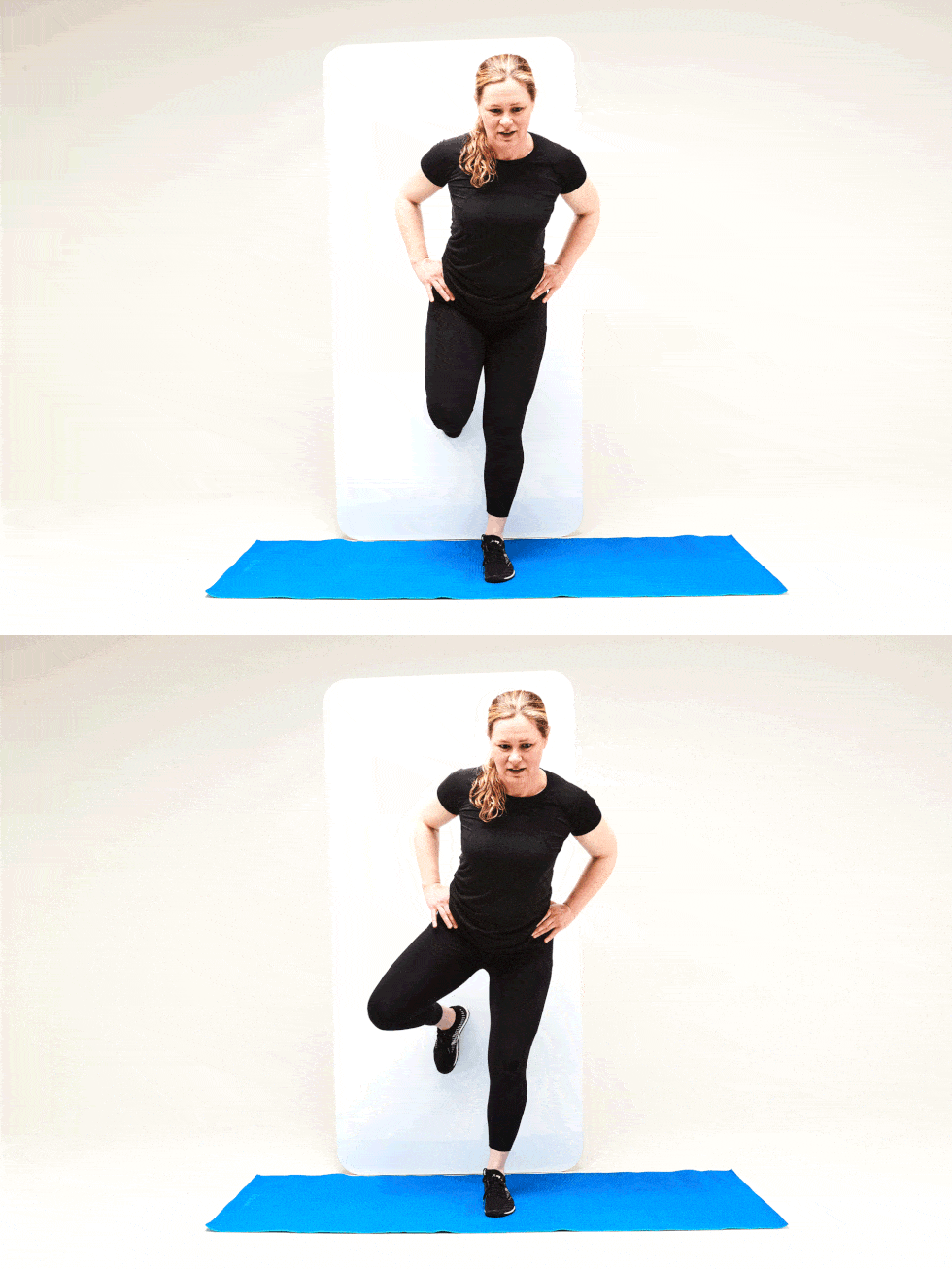
Banded bird dog
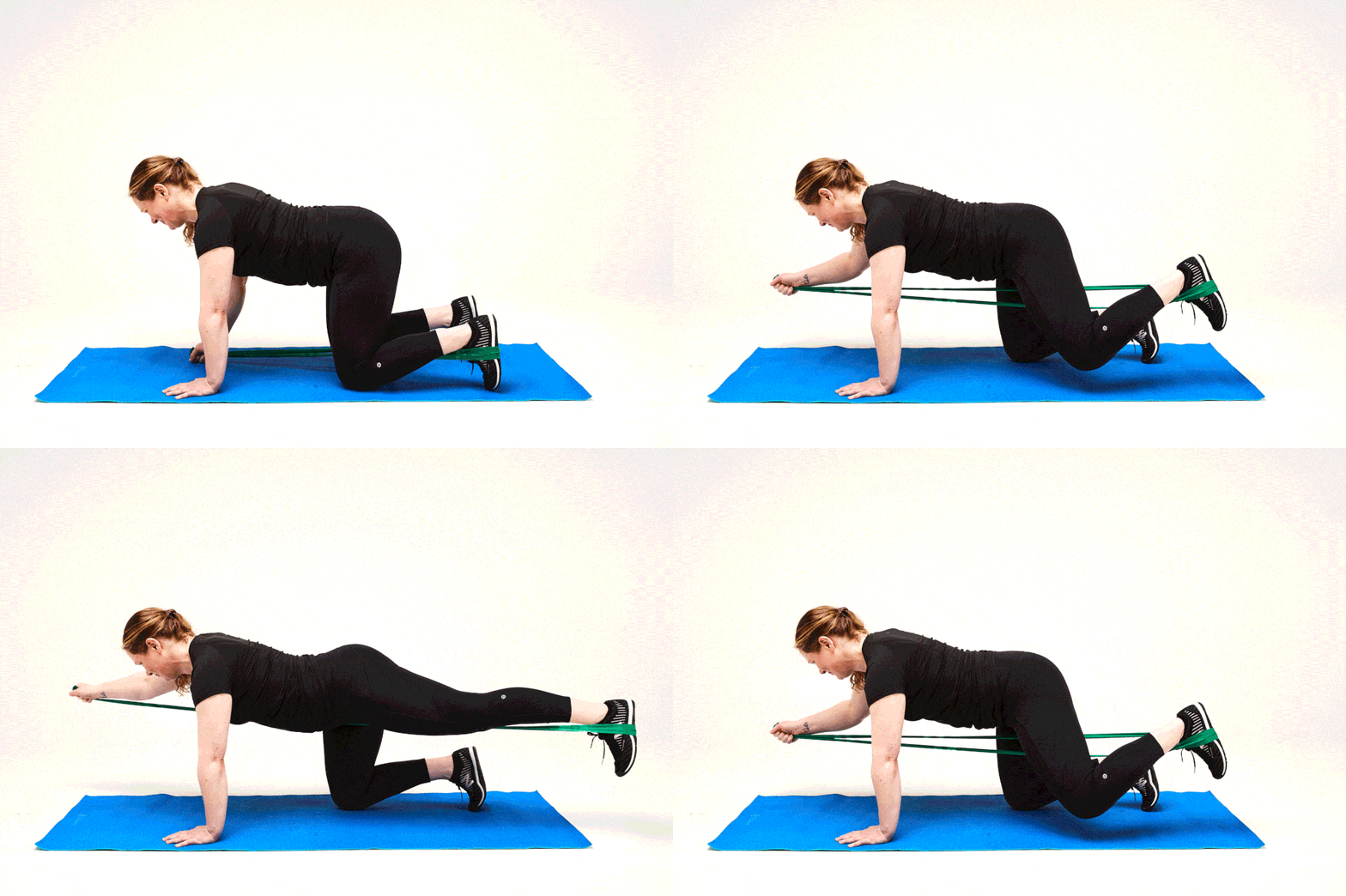
A banded bird dog challenges core stability and works the glutes. Better control through the trunk and hips can support running mechanics and ease demand on the QL. You’ll need a long loop resistance band. **How to do it:** 1. Begin on all fours. Loop the band around your left foot and hold it in your right hand so it runs diagonally beneath your body. 2. Extend your right arm and left leg at the same time, reaching them away from each other. Keep your back flat, your core engaged, and your shoulders and hips facing the floor. 3. Return to all fours. 4. Do as many controlled repetitions as you can before your form breaks down, aiming for at least six. Switch sides.